The short answer
Persistent hunger can reflect portions, calorie density, treats, routine, boredom, or a health problem. Measure the daily intake and watch weight, drinking, urination, stool, and energy rather than increasing food automatically.
The important distinction is between a cat who has learned to ask for food and a meaningful change in appetite. Neither can be diagnosed from begging alone. Establish what the cat actually eats and whether body weight or other behaviors are changing.
Hunger Patterns at a Glance
| Pattern | Useful next step |
|---|---|
| Begs at predictable times with stable weight | Review routine, portions, and reinforcement |
| Finishes meals rapidly | Check portion, feeder setup, competition, and enrichment |
| Hunger increased suddenly | Arrange veterinary advice |
| Eats more while losing weight | Prompt veterinary assessment |
| Hunger plus increased drinking or urination | Veterinary assessment |
| Hunger plus vomiting, diarrhea, weakness, or behavior change | Veterinary assessment; urgent if severe |
This table does not identify the cause. Weight, body condition, history, examination, and testing may be needed.
Check the routine first
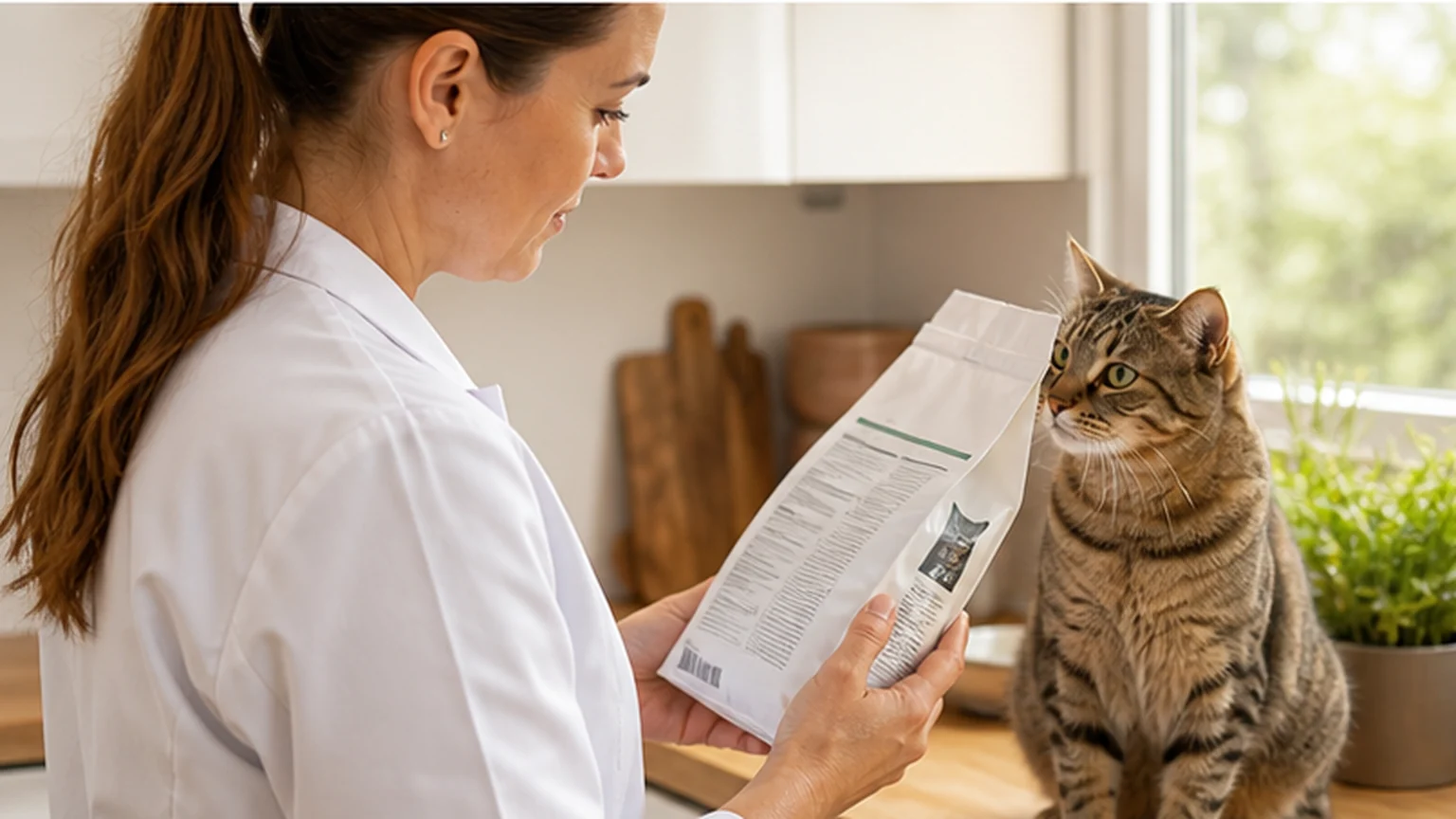
Confirm the food label, measure portions, count treats and toppers, and check whether another household member is feeding extra. A food can look like a large portion while providing fewer calories—or a small portion while being energy-dense.
1. Verify the Food and Portion
Find the calorie statement on the exact recipe and package size. It may list calories per can, pouch, cup, kilogram, or gram. Recheck after any food change; similar-looking products can differ.
Use a kitchen scale for dry food when practical. For wet food, record containers or grams. Compare the measured daily calories with a reasonable starting estimate and the cat's body-condition and weight trend.
Package feeding directions are broad starting guidance, not proof that the amount fits every cat. Do not increase or sharply restrict food from one day of begging.
2. Count Every Food Source
Include:
- wet and dry meals;
- treats and dental products;
- toppers and lickable snacks;
- kibble used in puzzles or training;
- food used to give medication;
- table food; and
- access to another pet's bowl or outdoors.
Ask every household member. A cat can convincingly request a second breakfast from someone who did not see the first one. A measured daily container or feeding checklist prevents duplication.
3. Review Meal Timing
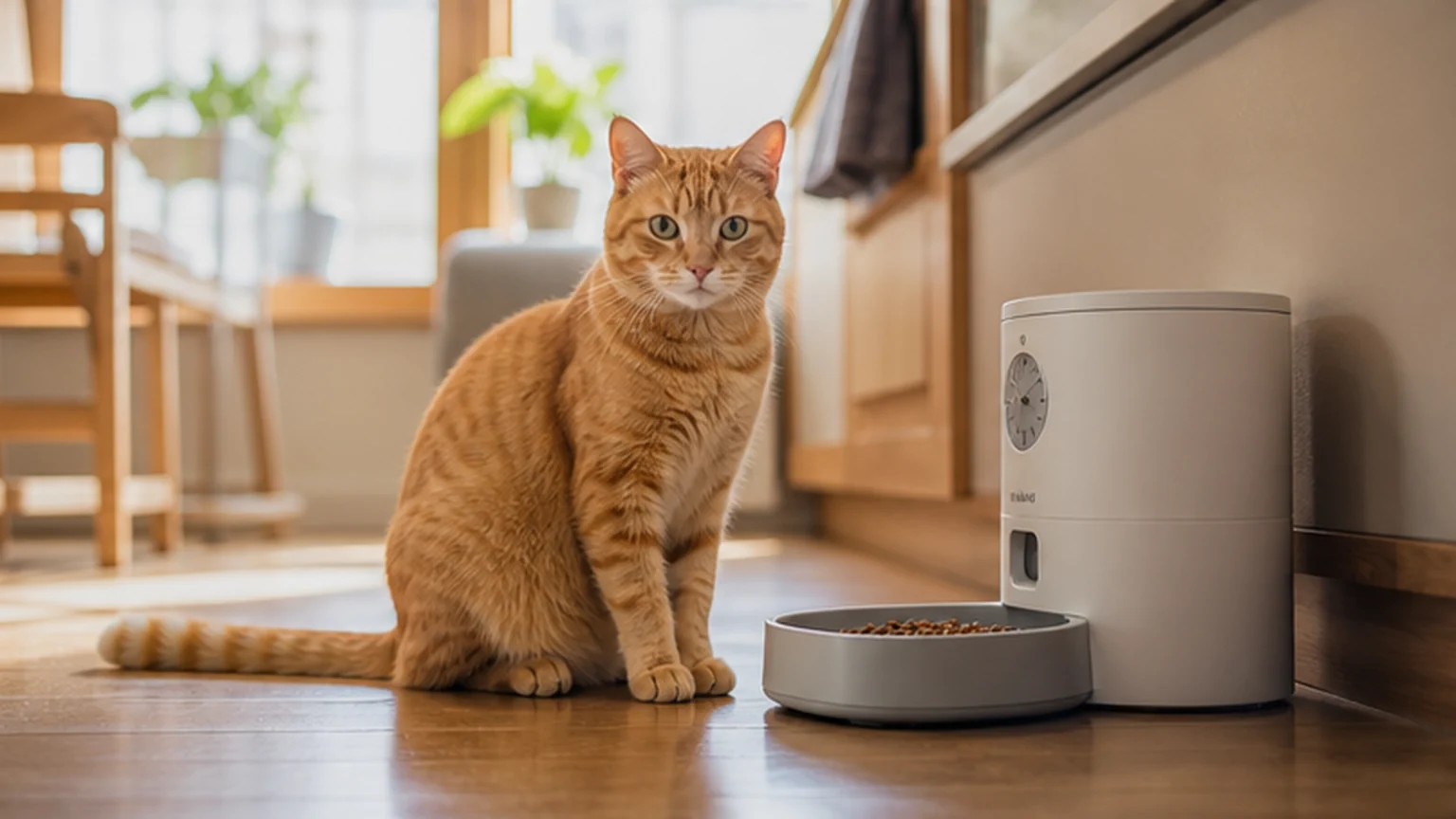
Frequency divides the daily allowance; it should not increase it. Several small meals may suit a cat who becomes restless between two large meals. Timed feeders can deliver a measured overnight or early-morning portion.
Do not respond to every request with food. If vocalizing or waking people reliably produces a snack, the behavior is reinforced even when calories are adequate. Keep meals predictable and respond with attention, play, grooming, or access to an interesting activity when appropriate.
4. Consider Food Competition
In multi-cat homes, one cat may eat quickly because another approaches, while a different cat may lose food. Shared bowls make both intake and hunger difficult to interpret.
Feed separately, supervise meals, or use microchip-controlled feeders when appropriate. Provide several water, litter, resting, and hiding locations so broader social pressure is not concentrated around food.
5. Add Enrichment Without Adding Calories
Boredom and anticipation can become food-seeking routines. Offer short interactive play sessions, climbing, scratching, window observation, hiding places, toy rotation, and food puzzles.
Use part of the measured food allowance in puzzles. Start easy and ensure the cat can succeed. A puzzle that is too difficult can create frustration rather than satisfying foraging.
Do not assume enrichment explains a new appetite change. It improves routine while veterinary causes are assessed, not instead of assessment.
Body Weight and Condition Change the Meaning
Hunger with stable weight and a long-standing routine differs from hunger with weight loss. Weigh the cat using the same scale and similar timing when practical, then look for a trend.
Body condition considers ribs, waist, and abdominal profile; muscle condition adds further context. A veterinary professional can demonstrate these assessments. A cat can lose muscle without a dramatic change on the scale.
If weight is increasing, verify calories and access before reducing food. Aggressive restriction can be unsafe. If weight is decreasing despite increased intake, arrange veterinary assessment promptly.
Broad Cause Categories
Persistent increased appetite can occur with:
- a portion or calorie-density mismatch;
- growth, pregnancy, nursing, or high activity;
- learned meal-seeking routines;
- food competition or restricted access;
- medication effects;
- reduced nutrient absorption or gastrointestinal problems;
- metabolic or endocrine illness; and
- other medical conditions.
These categories are intentionally broad. Appetite alone cannot distinguish them, and listing a disease does not mean your cat has it. Diagnosis requires veterinary history, examination, and sometimes tests.
What to Record
Keep a log for several days when safe:
- exact food and calories;
- grams, cans, pouches, treats, and leftovers;
- meal times and who fed;
- begging times and triggers;
- body weight when available;
- drinking and urine changes;
- stool and vomiting;
- activity, sleep, and behavior;
- medication; and
- access to other food.
Bring the log and food labels to the appointment. It gives the veterinary team clearer information than “always hungry.”
When to call a veterinarian
Arrange veterinary advice when increased hunger persists, especially with weight loss or gain, increased drinking or urination, vomiting, diarrhea, weakness, or a change in behavior. Do not assume hunger is simply a personality trait.
Contact a veterinarian sooner when the change is sudden, pronounced, or occurs in a kitten, senior, pregnant or nursing cat, or cat with an existing condition. Bring details about duration and actual intake.
Seek urgent care for collapse, severe weakness, breathing difficulty, repeated vomiting, severe pain, inability to urinate, suspected toxin exposure, or another emergency sign. Increased appetite itself is not usually the emergency; accompanying physical signs determine urgency.
What Not to Do
- Do not double meals because the cat vocalizes.
- Do not start a crash diet after seeing weight gain.
- Do not give dewormers, supplements, or medication based on appetite alone.
- Do not use another pet's prescription diet.
- Do not ignore weight loss because the cat is eating.
- Do not punish begging or food theft.
- Do not rely on a calorie calculator to rule out illness.
Parasite control should be selected with a veterinarian based on the cat, location, lifestyle, and product safety. Human weight-loss products and medications can be dangerous.
Build a Measured Routine
- Review the exact food's calories.
- Set one estimated daily allowance with veterinary input when needed.
- Measure all meals and reserve calories for treats.
- Divide the total into a realistic schedule.
- Feed cats separately if intake is unclear.
- Add play and foraging using food from the allowance.
- Track weight, body condition, and appetite.
- Seek veterinary review for persistent or changing hunger.
Change one routine variable at a time. If you change the food, portion, schedule, feeder, and treats together, you cannot tell which change affected behavior or weight.
Do not start a restrictive diet, parasite treatment, supplement, or medication based on appetite alone. Use the calorie calculator for routine estimates, not symptom diagnosis.
Frequently Asked Questions
Why does my cat act hungry immediately after eating?
The meal may be eaten quickly, the behavior may be learned, or the portion, competition, enrichment, or health may need review. Measure intake and look at weight and other changes.
Should I feed more because my cat begs?
Not automatically. Confirm the current calories and body condition first. Persistent new hunger or weight change warrants veterinary advice.
Can I use a slow feeder?
It may extend mealtime for a healthy cat who eats quickly. Choose a cleanable product, introduce it easily, and keep the daily portion unchanged. It does not evaluate medical causes.
Is my cat hungry or bored?
You cannot know from vocalizing alone. Offer non-food interaction at non-meal times, enrich the environment, and maintain a measured schedule while monitoring weight and health.
What if my cat steals another pet's food?
Feed separately and control access. The stolen food affects calorie records and may be inappropriate, especially when either animal has a prescribed diet.
Key Takeaway
Persistent hunger deserves measurement, not automatic refilling. Confirm the exact food, total calories, meal schedule, treats, competition, and enrichment, then track weight and other body changes. A long-standing food-seeking routine may be behavioral, but sudden hunger, weight change, increased drinking or urination, digestive signs, or weakness requires veterinary assessment.
Read how to read a cat-food label, daily calorie requirements, and the feeding guide.
Estimate your cat's daily calorie range
Use PurrWise's calculator for a practical starting estimate, then compare it with body condition and weight trend.