Use this as a starting estimate
A calorie result is an estimated starting range, not a prescription. Adjustments may be needed for body condition, age and life stage, neuter status, activity, medical conditions, food calorie density, and weight trend over time.
The short answer
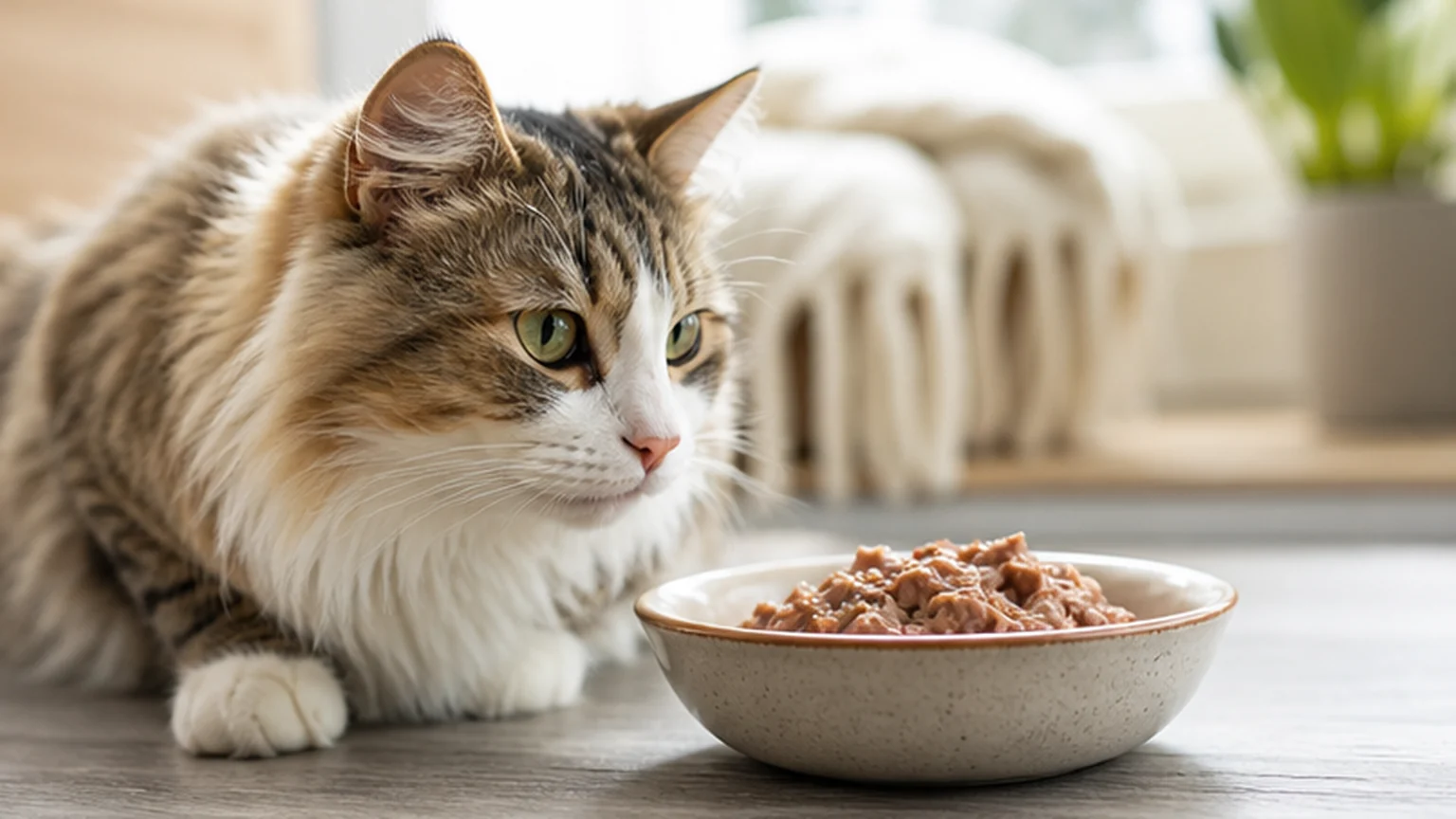
Start with an estimated daily calorie range, then divide it by the wet food's calories per can, tray, pouch, or gram. The correct portion depends on the individual cat and the exact label.
The calculator is a starting estimate, not an exact prescription.
What to check on the label
Find the calorie statement for the exact recipe and package size. It may say calories per can, pouch, tray, kilogram, or gram. Do not assume two products with the same serving size contain the same calories.
Also check the nutritional adequacy statement. A food intended to provide the whole diet should be labeled complete and balanced for your cat's life stage. Products described as complementary, supplemental, or for intermittent feeding may be useful as toppers or treats, but they should not quietly replace a complete diet.
Read the net weight as well as the package name. “One can” is not a consistent unit because cans come in different sizes. Even two recipes sold in matching containers can have different calorie densities. Recheck the label whenever you change flavor, texture, formula, or package size.
How to convert calories into portions
If a food provides 100 calories per can and the estimated daily range is 200–250 calories, the demonstration amount would be about 2–2.5 cans per day. This is an example of the calculation, not a universal recommendation.
Check whether the label reports calories per container or per kilogram, account for treats, and divide the daily amount across the feeding schedule that works for your cat.
If calories are listed per kilogram, divide by 1,000 to get calories per gram. Then use:
Daily calories ÷ calories per gram = grams per day
For mixed feeding, subtract the calories supplied by dry food or treats before converting the remainder into wet-food portions.
A step-by-step method
- Estimate a daily calorie range for your individual cat.
- Find the calories for the exact wet-food package.
- Subtract calories allocated to treats, dry food, or other extras.
- Divide the remaining calories by calories per can, pouch, tray, or gram.
- Divide that daily amount among meals.
- Monitor body condition and weight trend, then seek guidance before making substantial changes.
Write the calculation down. A note on the refrigerator can prevent different household members from each serving what they believe is the daily allowance.
Example: converting a range
If the estimated range is 200–250 calories and one pouch contains 80 calories, the arithmetic demonstration is 2.5–3.125 pouches per day. That is a calculation example, not a universal recommendation. Round portions only after considering the food label, meal routine, and your cat's weight trend.
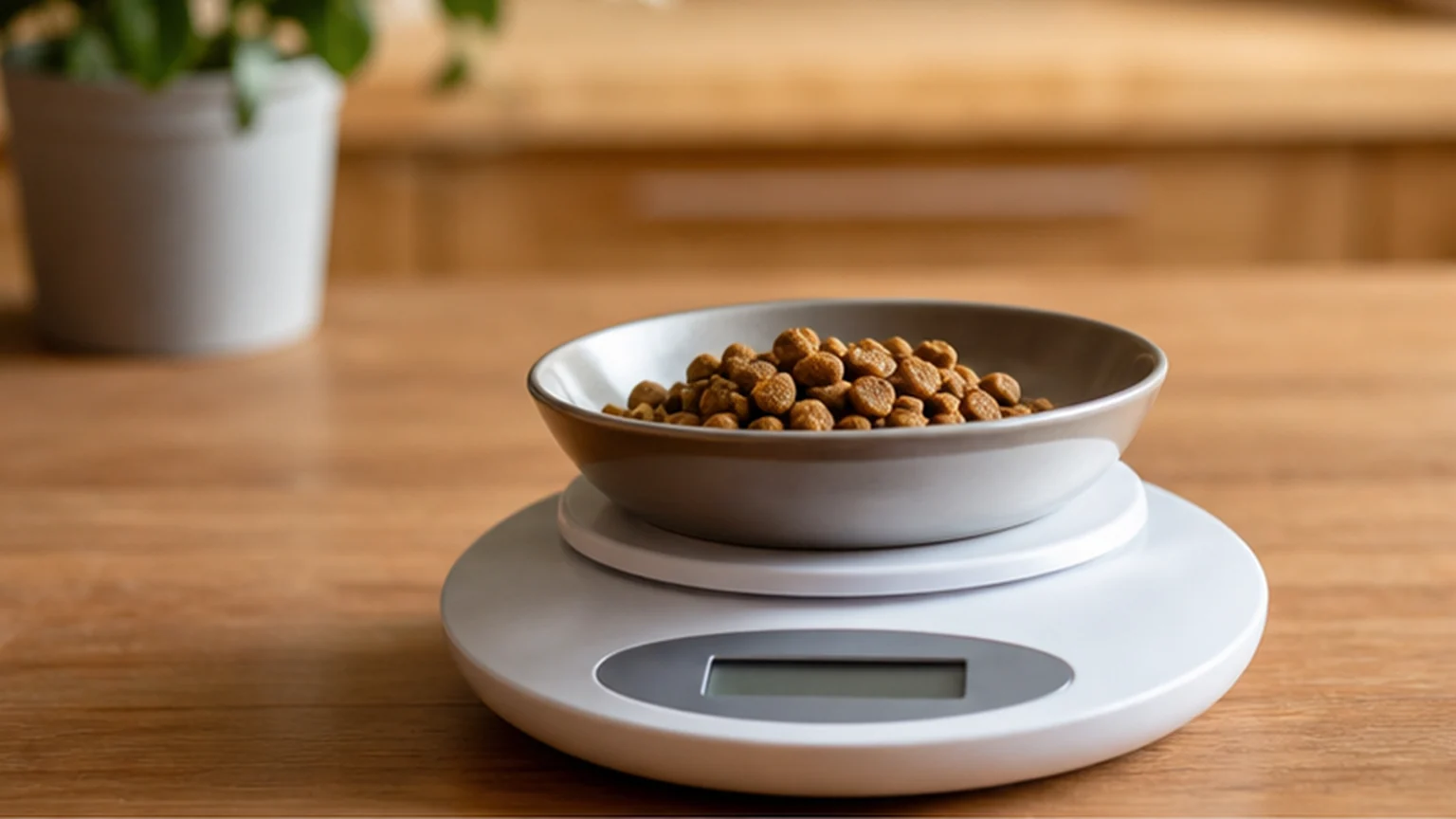
If you need a partial package, weighing the food in grams can be clearer than judging a fraction by eye. Suppose a 100-gram tray contains 120 calories. It provides 1.2 calories per gram. A planned 60-calorie portion would therefore be 50 grams. Again, this demonstrates unit conversion rather than recommending 60 calories for a particular cat.
Account for mixed feeding and treats
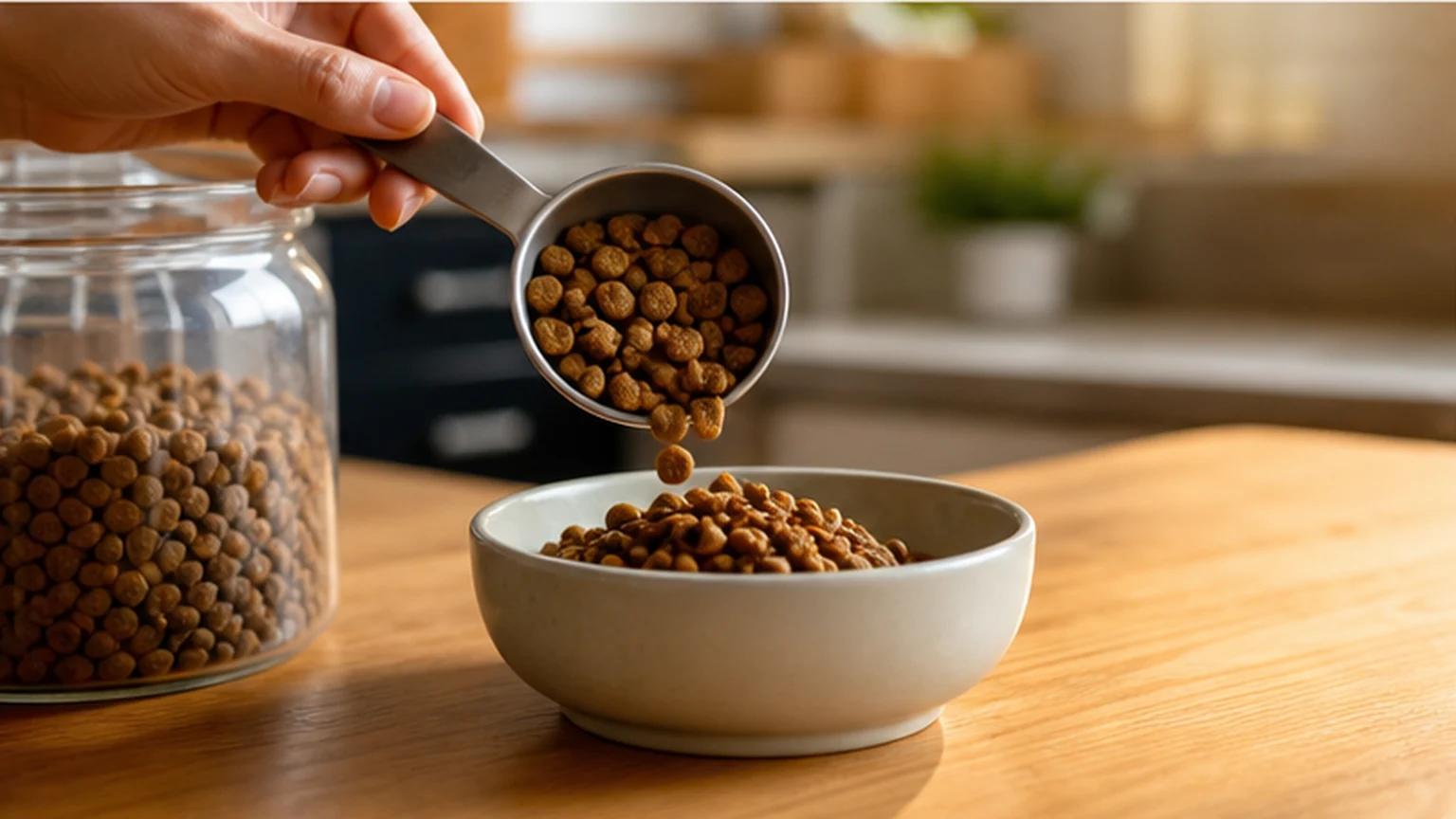
Mixed feeding works best when wet and dry food are treated as parts of one daily total. If the estimated target were 220 calories and 70 calories were reserved for measured kibble and treats, the remaining 150 calories could be converted using the wet-food label. Serving a full wet allowance plus a full dry allowance can unintentionally double-count energy.
Toppers matter too. Small additions may seem insignificant, but repeated portions of treats, lickable snacks, table food, or food used for medication can alter the total. Record them honestly rather than trying to make the main meal calculation artificially precise while ignoring extras.
Decide how many meals to serve
The calculated daily amount does not dictate a meal schedule. Many cats prefer several small meals, while household routines may make two or three meals more practical. Divide the total consistently and observe whether your cat eats each portion.
Timed meals make appetite changes easier to notice. If your cat routinely leaves food behind, record what is actually eaten rather than assuming the served amount was consumed. In multi-cat homes, feed separately when practical so one cat cannot finish another's meal.
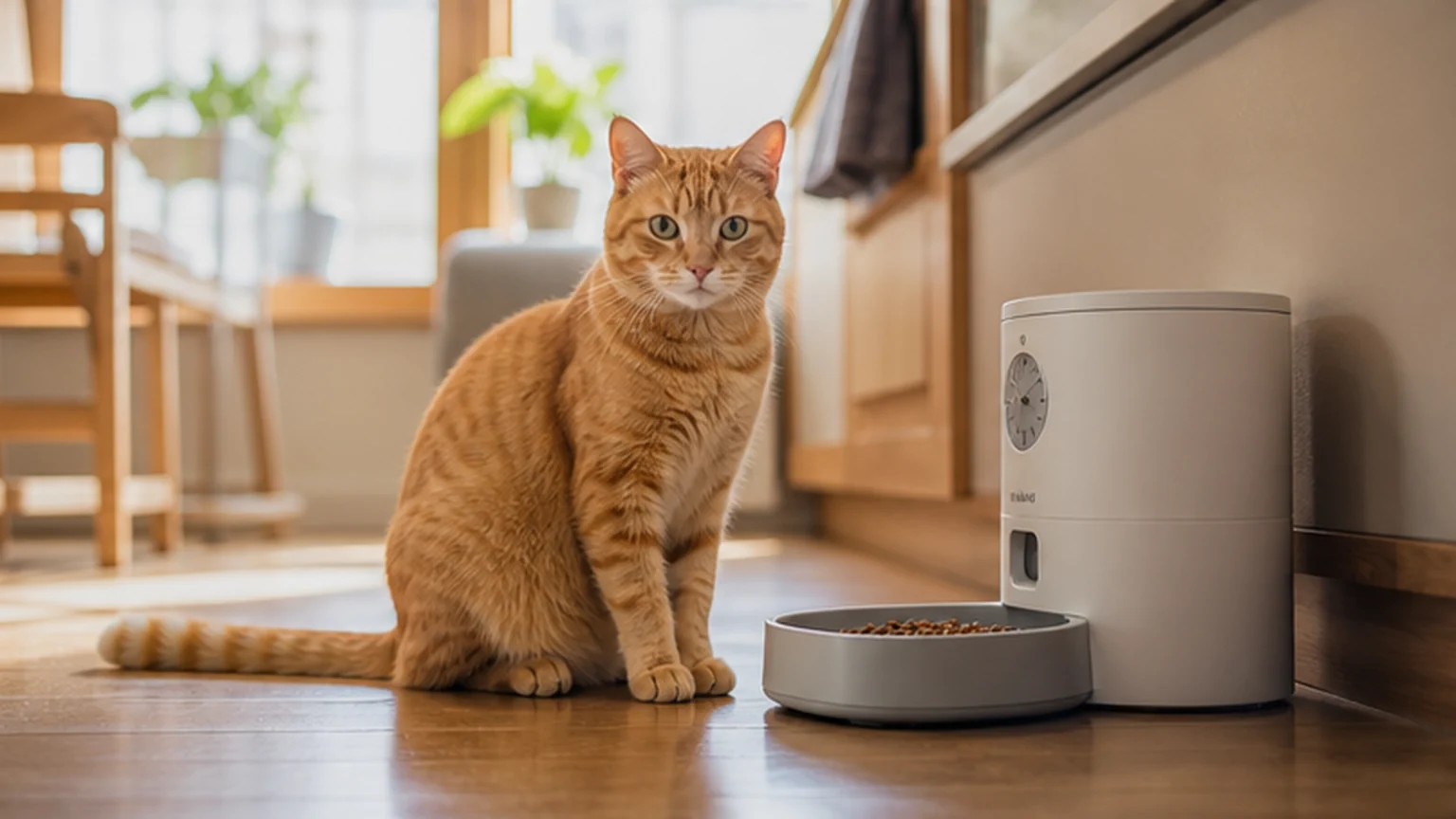
If a cat wakes the household early or eats too quickly, changing meal timing or using a timed wet-food feeder may help. Choose equipment designed to keep food at a safe temperature, and follow its instructions.
Wet-food storage and food safety
Cover and refrigerate an opened container promptly according to the manufacturer's directions. Use clean utensils rather than feeding directly from a spoon that has contacted another food. Refrigerated food may be less aromatic; some cats accept it after it has warmed briefly to a safe room temperature.
Do not leave wet food sitting out for extended periods. Room temperature, humidity, and the manufacturer's instructions all matter, so discard questionable leftovers rather than mixing them into a fresh serving. Wash bowls between meals, especially when residue has dried around the edges.
Keep the original label or note the product name, lot code, and best-before date. That information is useful if a product is recalled or your veterinary team asks exactly what your cat has been eating.
Monitor the result
A calculation is only the start of a feedback loop. Measure portions in the same way, weigh your cat consistently when practical, and observe body condition over time. Look at the ribs, waist, and abdominal profile rather than relying on body weight alone.
Avoid changing the portion in response to one unusual meal or a single scale reading. First confirm that the same food and measurement method were used and that nobody else offered extras. A sustained trend is more informative than daily noise.
Common mistakes to avoid
- Using the feeding chart without checking the calorie statement.
- Assuming all cans or pouches contain the same amount.
- Adding wet food on top of a complete dry-food allowance.
- Forgetting treats, toppers, and food offered by other people.
- Measuring a partial container by eye when consistency matters.
- Making a large calorie reduction to force faster weight loss.
- Switching foods abruptly when a gradual transition is possible.
When veterinary guidance matters
Contact a veterinarian for a kitten, pregnancy or nursing, unexpected weight change, poor appetite, diagnosed condition, or a planned weight-loss diet. Prompt advice is important if your cat stops eating or eats much less than usual, particularly with vomiting, weakness, pain, or breathing changes.
This calculation is an estimated starting point, not a prescription. Body condition, age, life stage, neuter status, activity, medical conditions, food calorie density, and weight trend may require adjustments.
Frequently asked questions
How many cans should a cat eat each day?
There is no reliable answer without the cat's estimated needs and the exact food's calories per can. Divide the individualized starting range by the label value, then monitor the result.
Is one pouch the same as one can?
No. Package weight and calorie density vary. Compare calories per container or convert both products to calories per gram.
Can I add water to wet food?
Some cats accept a small amount of added water, while others dislike the changed texture. Use fresh water and discard leftovers appropriately. Added water does not make an incomplete food nutritionally complete or replace veterinary advice.
What if my cat will not finish the calculated amount?
Do not force-feed or assume the calculator must be correct. Check the food's calories and what your cat actually consumes. Contact a veterinarian promptly for a meaningful or persistent appetite reduction, especially with other changes.
Key takeaway
To estimate a wet-food portion, start with a reasonable daily calorie range, subtract other calorie sources, and divide by the exact product's calorie statement. Serve the result in a practical meal schedule, store leftovers safely, and use weight and body-condition trends to test whether the starting estimate remains appropriate.
See daily calorie requirements, dry-food portions, and the feeding pillar.
Estimate your cat's daily calorie range
Use PurrWise's calculator for a practical starting estimate, then compare it with body condition and weight trend.
Sources & Scientific References (3)
Feeding Your Cat
Cornell Feline Health Center • Accessed 2026-07-23
Official Publication: AAFCO Methods for Substantiating Nutritional Adequacy of Dog and Cat Foods
Association of American Feed Control Officials • Accessed 2026-07-23
Global Nutrition Guidelines
World Small Animal Veterinary Association • Accessed 2026-07-23