Use this as a starting estimate
A calorie result is an estimated starting range, not a prescription. Adjustments may be needed for body condition, age and life stage, neuter status, activity, medical conditions, food calorie density, and weight trend over time.
The short answer
Use the calorie calculator for an estimated daily range, then convert that range using the dry food's calorie-per-cup or calorie-per-gram information. Dry food is energy-dense, so small measuring errors can add up.
The result is a starting estimate, not an exact instruction.
Read the calorie statement
Dry food may list calories per cup, kilogram, or gram. If it lists calories per kilogram, divide by 1,000 to find calories per gram. Then calculate:
Daily calories ÷ calories per gram = grams per day
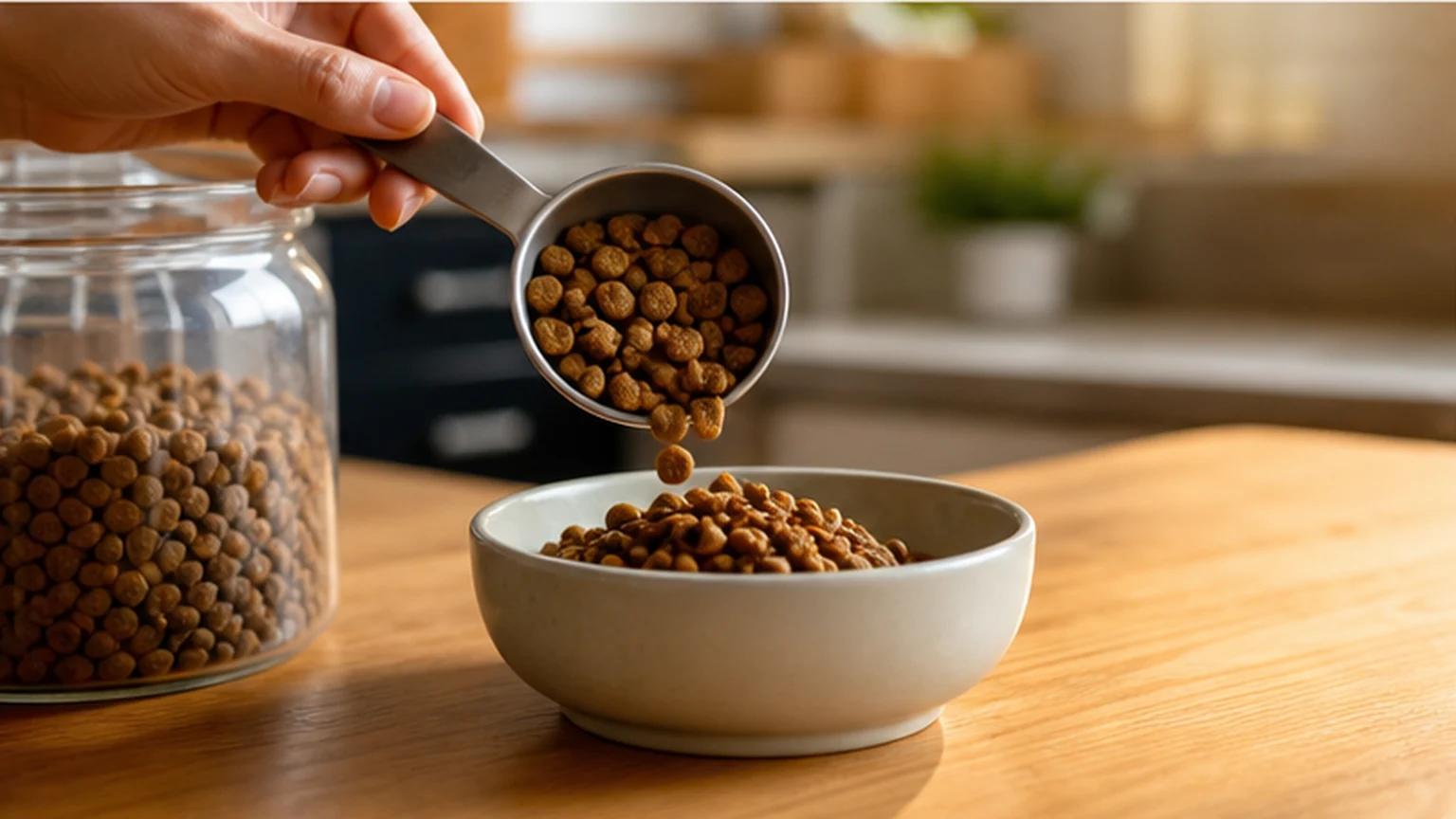
Weighing food in grams is often more consistent than relying on a household cup, especially when kibble pieces vary in size or settle differently in the measure.
Check the nutritional adequacy statement at the same time. The main food should be complete and balanced for the appropriate life stage. A product labeled for supplemental or intermittent feeding is not designed to provide the entire diet by itself.
Do not assume the calories stay the same across a brand's recipes. Flavor, kibble shape, life-stage formula, and product updates can change calorie density. Recheck the current bag whenever you switch foods, even if the suggested scoop looks familiar.
Example: cups versus grams
Suppose the estimated daily range is 200–250 calories and the food contains 400 calories per cup. The demonstration range is 1/2–5/8 cup per day. If the label instead provides calories per gram, use the same division with grams rather than cups.
These figures demonstrate the math only. They are not universal portions.
A grams-based example
Suppose a label lists 3,800 calories per kilogram. Divide by 1,000 to get 3.8 calories per gram. If a hypothetical remaining allowance were 190 calories after accounting for treats, the arithmetic would be:
190 ÷ 3.8 = 50 grams per day
That result belongs only to the example. It does not establish that a particular cat needs 190 calories or 50 grams. The value of grams is consistency: the same measured mass is easier to repeat than a scoop that may be heaped, compressed, or uneven.
Build the portion step by step
- Start with an estimated daily calorie range.
- Reserve calories for any wet food, treats, or toppers.
- Find calories per cup, kilogram, or gram on the exact bag.
- Convert the remaining calories into grams or a level volume measure.
- Divide the daily portion among meals or feeders.
- Monitor weight and body condition and seek guidance before substantial adjustments.
Write down both the product and the calculated amount. “One scoop” is hard for another person to reproduce unless the scoop size and whether it should be level are clear.
Measure consistently
Use a level measure or, when practical, a kitchen scale. Include treats and any wet food in the daily total. Free-feeding can make intake harder to track, especially when weight is changing.
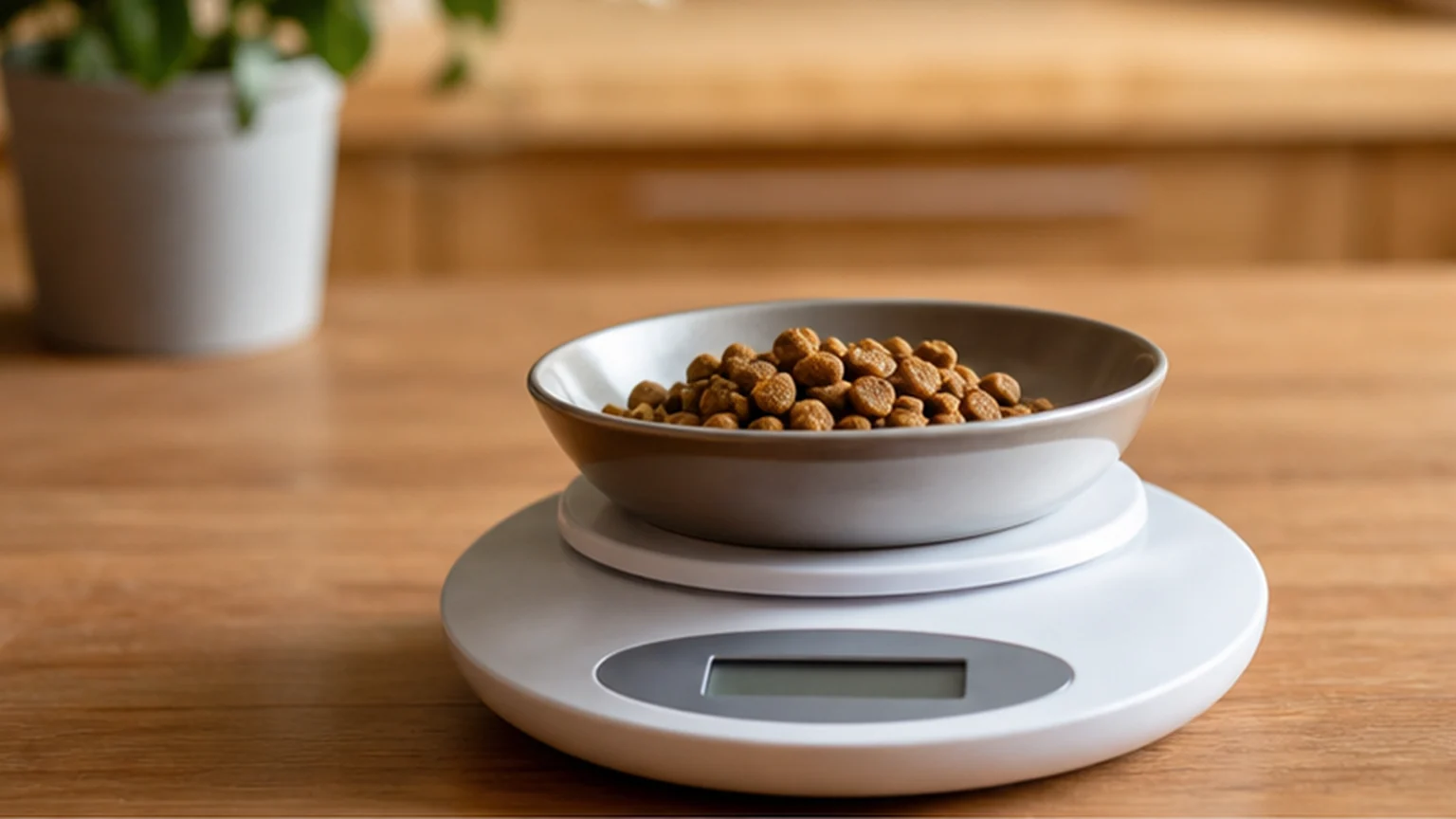
If you use a kitchen scale, place the empty bowl on it, set the display to zero, and add food until the intended gram amount appears. For a full day prepared in advance, weigh the entire allowance into a dedicated container. Every meal and treat-sized portion of kibble can then come from that container.
Avoid repeatedly topping up yesterday's food. It becomes difficult to know what was eaten, and crumbs and oils accumulate in the bowl. Empty and wash bowls routinely according to the material and manufacturer's care instructions.
Free-feeding and mixed feeding
Leaving dry food available can make actual intake difficult to measure when a cat grazes or when more than one person fills the bowl. Pre-measuring the day's amount can make the routine easier to track. For mixed feeding, convert each food to calories and keep the combined total in view.
Free-feeding is not automatically wrong for every cat, but it reduces visibility. A weighed daily allowance preserves some grazing flexibility while setting a clear boundary. If food remains at the end of the day, record the remainder rather than assuming the full allowance was eaten.
In multi-cat homes, a shared bowl cannot show which cat ate what. Separate rooms, supervised meals, or microchip feeders can help when portions differ. This is particularly important when one cat eats quickly, another grazes slowly, or either cat has a veterinary diet.
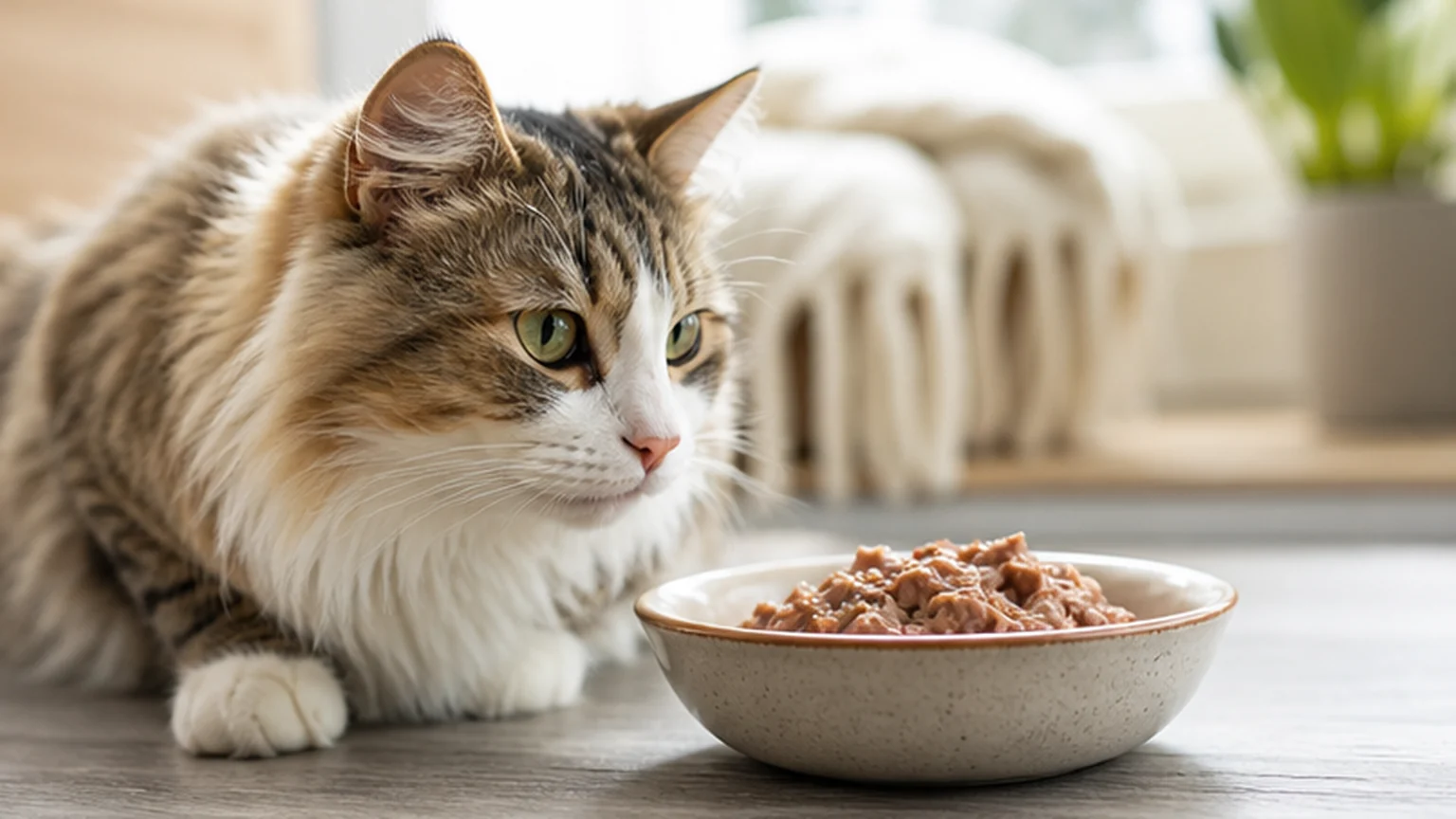
For mixed feeding, do the calculation before filling both bowls. If wet food and treats account for part of the daily estimate, only the remainder is available for dry food. Adding a “small” kibble portion to a complete wet-food allowance may produce a meaningful calorie increase because dry food is energy-dense.
Meal timing and enrichment
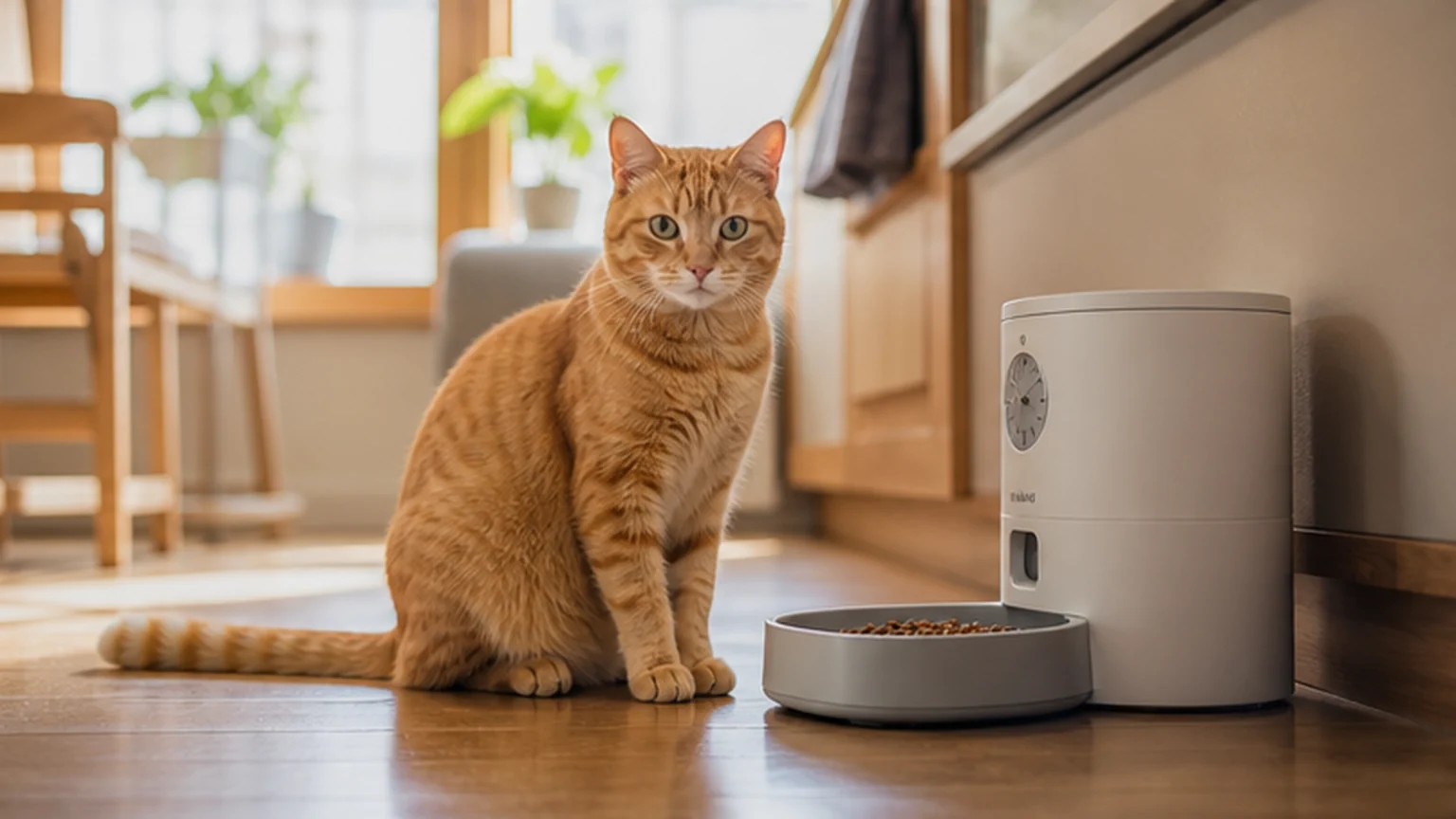
The daily amount can be divided into several small meals. Timed feeders may suit early-morning or overnight schedules, while puzzle feeders can encourage foraging and slow down cats who finish a bowl rapidly. Begin with an easy puzzle so your cat learns how it works, then increase difficulty gradually.
Food used in training or enrichment still counts toward the daily total. Take kibble from the measured allowance rather than adding an untracked handful. This lets enrichment support the routine without changing its energy budget.
Predictable meals also make appetite changes easier to notice. A cat who suddenly leaves a familiar meal, visits the bowl but cannot eat, or consumes much less than usual deserves attention.
Storage and freshness
Keep dry food in a cool, dry place and close the package after each use. When practical, retain food in its original bag and place the bag inside a clean, sealed container. The original packaging provides product, lot, and date information and is designed to help protect the food.
Avoid pouring each new bag over old crumbs. Wash and fully dry storage containers between bags so residues and moisture do not accumulate. Buy a package size your household can use within the manufacturer's recommended period after opening.
Discard food that smells unusual, appears damp or moldy, contains pests, or is subject to a recall. If your cat suddenly refuses a newly opened bag, check the product details as well as the cat's health.
Check the trend, not one day
Monitor body condition and weight consistently. Ask a veterinarian to help if weight changes unexpectedly, appetite changes, the cat is growing or pregnant, a medical condition is present, or you are planning weight loss. Do not sharply restrict food without veterinary guidance.
Use the same scale and similar timing when weighing your cat if possible. Look for a sustained direction rather than reacting to one reading. Body condition adds context: weight alone does not distinguish body fat from frame size and muscle.
Before altering the portion, confirm that the label, food, and measurement method are unchanged. Check for uncounted treats, access to another pet's bowl, and food offered by other household members. If the records are consistent and the trend is still unexpected, discuss a safe adjustment with a veterinarian.
Common dry-food portioning mistakes
- Estimating with a heaped cup instead of a level, defined measure.
- Reusing an old portion after changing to a more calorie-dense recipe.
- Filling an empty-looking bowl without tracking how much was added.
- Counting wet food but overlooking treats and puzzle-feeder kibble.
- Assuming an indoor or sedentary label determines an exact need.
- Reducing food sharply to accelerate weight loss.
The result is an estimated starting range, not an exact instruction. Reassess with your veterinarian when body condition, age and life stage, neuter status, activity, medical conditions, food calorie density, or weight trend changes.
Frequently asked questions
How many cups of dry food should a cat eat?
There is no universal cup amount. Estimate the cat's daily calories, subtract other food and treats, then divide by the exact kibble's calories per cup. Grams are often easier to measure consistently.
Is the serving guide on the bag enough?
It is a useful starting reference, not an individualized prescription. Compare it with the calorie statement and monitor body condition and weight trend.
Can I leave the full daily portion out?
Some cats can graze from a pre-measured allowance. This works only if you can tell which cat eats it and how much remains. Scheduled meals provide clearer intake information.
What if my cat always seems hungry?
First confirm the portion calculation and ensure every food source is counted. Persistent hunger, weight change, or other new signs should be discussed with a veterinarian rather than managed by repeatedly increasing or restricting food.
Key takeaway
Estimate dry-food portions from calories, not bowl appearance. Use the current product label, measure consistently—preferably in grams when practical—count wet food and extras, and monitor the result over time. The calculation supplies a starting point; your cat's body condition, weight trend, life stage, and veterinary guidance determine whether it remains suitable.
Read wet-food portions, daily calorie requirements, and the complete feeding guide.
Estimate your cat's daily calorie range
Use PurrWise's calculator for a practical starting estimate, then compare it with body condition and weight trend.
Sources & Scientific References (3)
Feeding Your Cat
Cornell Feline Health Center • Accessed 2026-07-23
Official Publication: AAFCO Methods for Substantiating Nutritional Adequacy of Dog and Cat Foods
Association of American Feed Control Officials • Accessed 2026-07-23
Global Nutrition Guidelines
World Small Animal Veterinary Association • Accessed 2026-07-23