Use this as a starting estimate
A calorie result is an estimated starting range, not a prescription. Adjustments may be needed for body condition, age and life stage, neuter status, activity, medical conditions, food calorie density, and weight trend over time.
The short answer
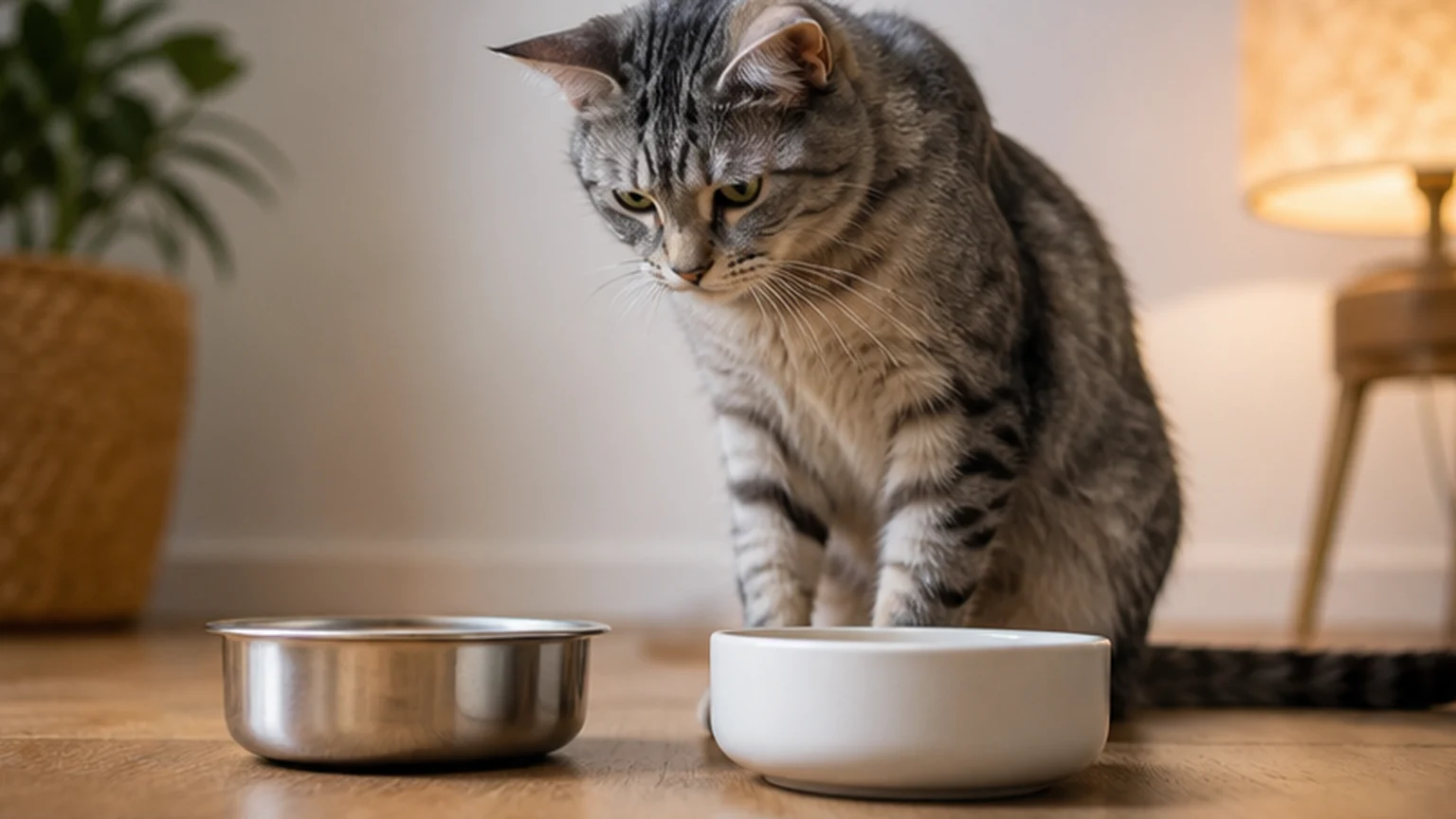
A fountain is useful only if your cat prefers it and you can keep it clean. A regular bowl can work just as well when it is stable, accessible, refreshed, and placed where your cat is comfortable.
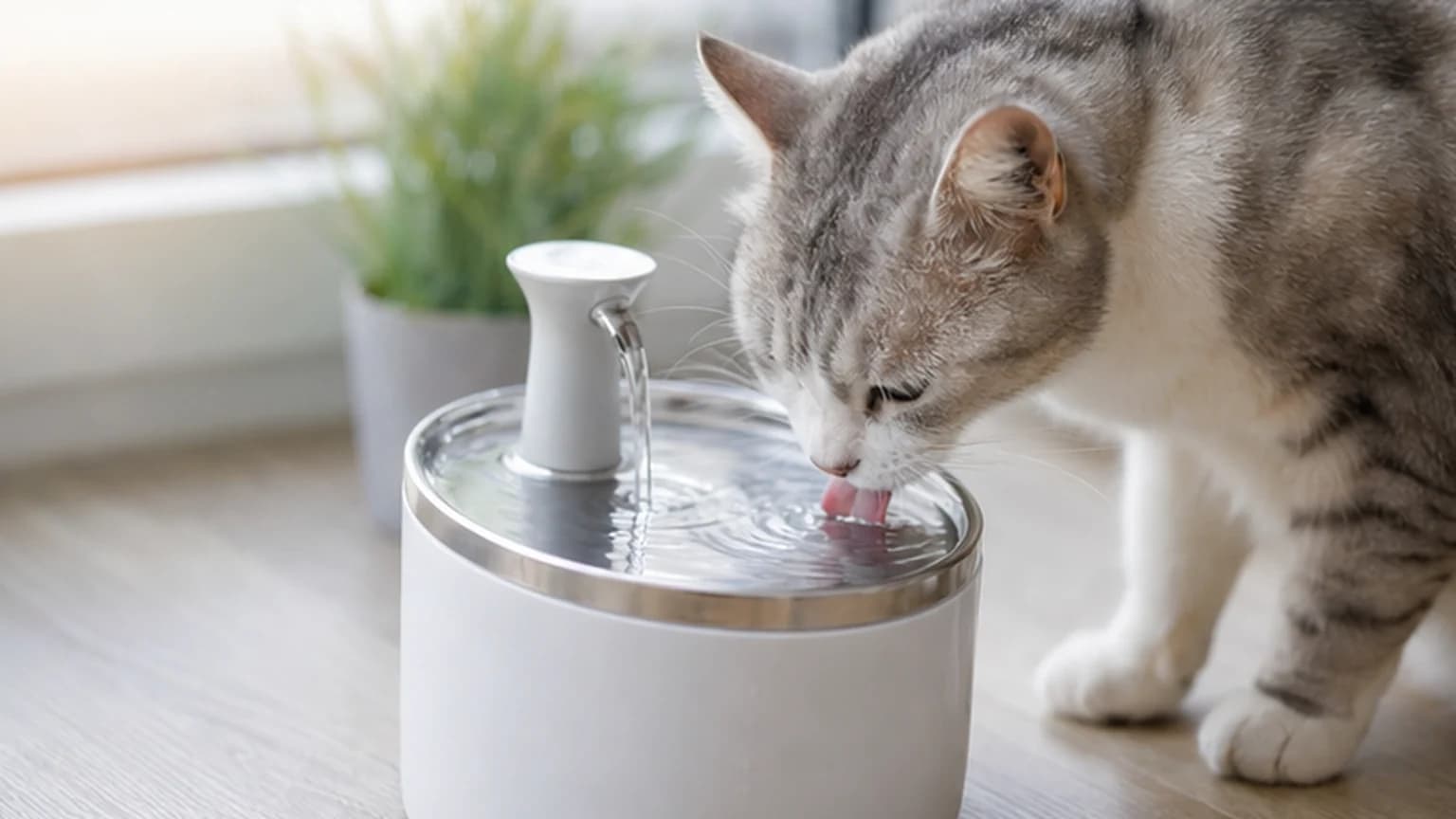
The best setup often includes both: a fountain for a cat that enjoys moving water and at least one bowl as an independent, power-free option. Product type does not guarantee drinking or prevent a health problem.
Fountain vs. Bowl Comparison
| Consideration | Fountain | Regular bowl |
|---|---|---|
| Water movement | Circulates water | Still water |
| Cat preference | Attractive to some, avoided by others | Familiar and accepted by many |
| Cleaning | Pump, reservoir, filters, and seams | Usually fewer parts |
| Power | Usually requires electricity or charging | No power needed |
| Noise | Pump and water sounds vary | Silent |
| Placement | Limited by cords and outlets | Easy to distribute |
| Failure points | Pump, filter, power, low water | Spills, contamination, evaporation |
| Cost | Purchase plus filters or parts | Usually lower |
Neither option maintains itself. Water quality depends on refreshing, cleaning, safe placement, and checking that the cat can access it.
Compare the trade-offs
Fountains may attract interest through movement but require pump, filter, and noise maintenance. Bowls are simpler and easier to place in multiple rooms but need frequent refreshing and washing. Offer a choice when possible.
Advantages and Trade-Offs of a Fountain
A fountain gives cats another water style to choose. Some investigate the movement, drink from a stream or sloped surface, or prefer circulating water. A larger reservoir may reduce how quickly a station runs empty, although it still needs daily inspection.
A filter does not eliminate cleaning. Food, saliva, hair, dust, and residue reach the reservoir and pump. The device must be disassembled according to its instructions, including parts below the visible drinking surface.
Pump sound can increase when water is low or parts are dirty. Some cats dislike vibration, splashing, or a motor that starts unexpectedly. Electrical cords must be protected from chewing and kept away from pooled water.
A fountain can stop during a power outage, pump failure, battery depletion, or accidental unplugging. Always provide another water source rather than making one powered device the cat's only access.
Advantages and Trade-Offs of a Bowl
A bowl is simple, silent, inexpensive, and easy to place in several locations. There are no filters, motors, apps, or power supplies. A clear or light interior can make water level and debris easy to see.
Multiple bowls create independent access. In a multi-cat or multi-level home, this can be more useful than one large fountain that every cat must approach.
Bowls still collect dust, hair, food, and litter, and a small bowl may empty or spill. Choose a stable, wide container that the cat accepts, and establish a refresh and washing routine.
What matters most
Use a wide, stable container, keep water away from litter, provide more than one station when practical, and clean according to the product instructions. Never let a fountain replace a backup bowl if a power outage would remove access.
Place water in quiet, accessible locations with a clear approach and exit. Some cats prefer water away from food, so test a separated station. Avoid loud appliances, busy doorways, direct contamination from food, and spaces where another animal can guard access.
Older cats or cats with limited mobility benefit from nearby options that do not require stairs or jumping. Do not assume a raised fountain is easier without watching posture and use.
How to Introduce a Fountain
- Set up and rinse the fountain according to its instructions.
- Place it near—but not in place of—a familiar bowl.
- Let the cat investigate while the fountain is off.
- Turn it on when the room is calm and remain neutral.
- Keep the familiar bowl available for several weeks.
- Observe actual drinking, noise tolerance, and access.
Do not carry the cat to the fountain, place paws in water, or remove every bowl to force use. If the fountain offers adjustable flow, begin gently and avoid splashing that wets the floor or the cat's face.
Fountain Cleaning Checklist
Follow the manufacturer's schedule, then clean more frequently if residue accumulates. A thorough routine generally means powering down safely, discarding old water, separating removable parts, cleaning the reservoir and drinking surface, opening the pump when instructed, rinsing thoroughly, replacing filters on schedule, and inspecting cords and seals.
Do not keep a filter beyond its useful life simply because it looks clean. Conversely, replacing filters does not substitute for washing the device.
Bowl Cleaning Checklist
Empty and refresh bowls daily and whenever debris appears. Wash routinely with a method appropriate for the material, rinse thoroughly, and inspect for chips, cracks, rust, sharp damage, or degraded non-slip parts.
Avoid topping up indefinitely. Adding clean water to residue does not create a clean station. Rotate spare bowls so one can be used while another is washed.
Multi-Cat Homes
One fountain is not enough merely because its reservoir is large. Cats need distributed access. Provide several stations in different rooms and, where practical, different levels of the home.
Watch for subtle guarding: staring, following, blocking a doorway, or displacing another cat. A quiet cat may drink less because the route feels unsafe. Move resources apart rather than lining several containers together.
Cost and Reliability
Calculate fountain cost beyond the purchase price: filters, pump replacement, cleaning brushes, electricity or charging, and time. Check whether replacement parts are available before buying.
For bowls, include enough containers for rotation and replacement. A simple setup with several durable bowls may offer more redundancy than one premium fountain.
Test any fountain before relying on it while you are away, but do not treat a large reservoir as permission to leave a cat without human checks. Water devices can fail, spill, become contaminated, or be blocked.
Common Mistakes
- Removing the old bowl on the fountain's first day.
- Assuming moving water is preferred by every cat.
- Refilling a fountain without cleaning the pump and reservoir.
- Using a filter as a substitute for fresh water.
- Providing one station for several cats.
- Placing cords where they can be chewed or wet.
- Relying on power without a backup bowl.
- Treating increased or reduced drinking as a product problem only.
If your cat drinks much less, seems weak, vomits repeatedly, or shows other illness signs, contact a veterinarian. Product changes are not a substitute for medical evaluation.
Marked increases in drinking or urination also deserve veterinary attention. Straining to urinate, repeated litter-box visits with little or no urine, collapse, breathing difficulty, or suspected toxin exposure requires prompt care. Do not use a fountain purchase or a home dehydration test to delay assessment.
Frequently Asked Questions
Do fountains make cats drink more?
Some cats prefer and use them more; others do not. Offer a choice and observe your cat rather than relying on a universal promise.
Can a fountain be the only water source?
It should not be. A separate bowl protects access during power, pump, filter, or cleaning problems.
Are filters enough to keep fountain water clean?
No. Filters have a limited role and replacement schedule. The reservoir, pump, channels, and drinking surface still require washing.
Which fountain material is best?
Stainless steel, ceramic, and plastic products each vary in design and quality. Prioritize food-contact suitability, complete disassembly, cleanability, stability, replacement parts, and your cat's preference.
Key Takeaway
A fountain offers moving water and may suit a cat that enjoys it, while bowls provide simplicity, silence, easy distribution, and reliability. Choose based on observed use and the maintenance your household can sustain. Whatever the primary station, provide clean water in more than one location and keep a power-free backup available.
See healthy hydration habits, cat bowl materials, and the new cat checklist.