Opening
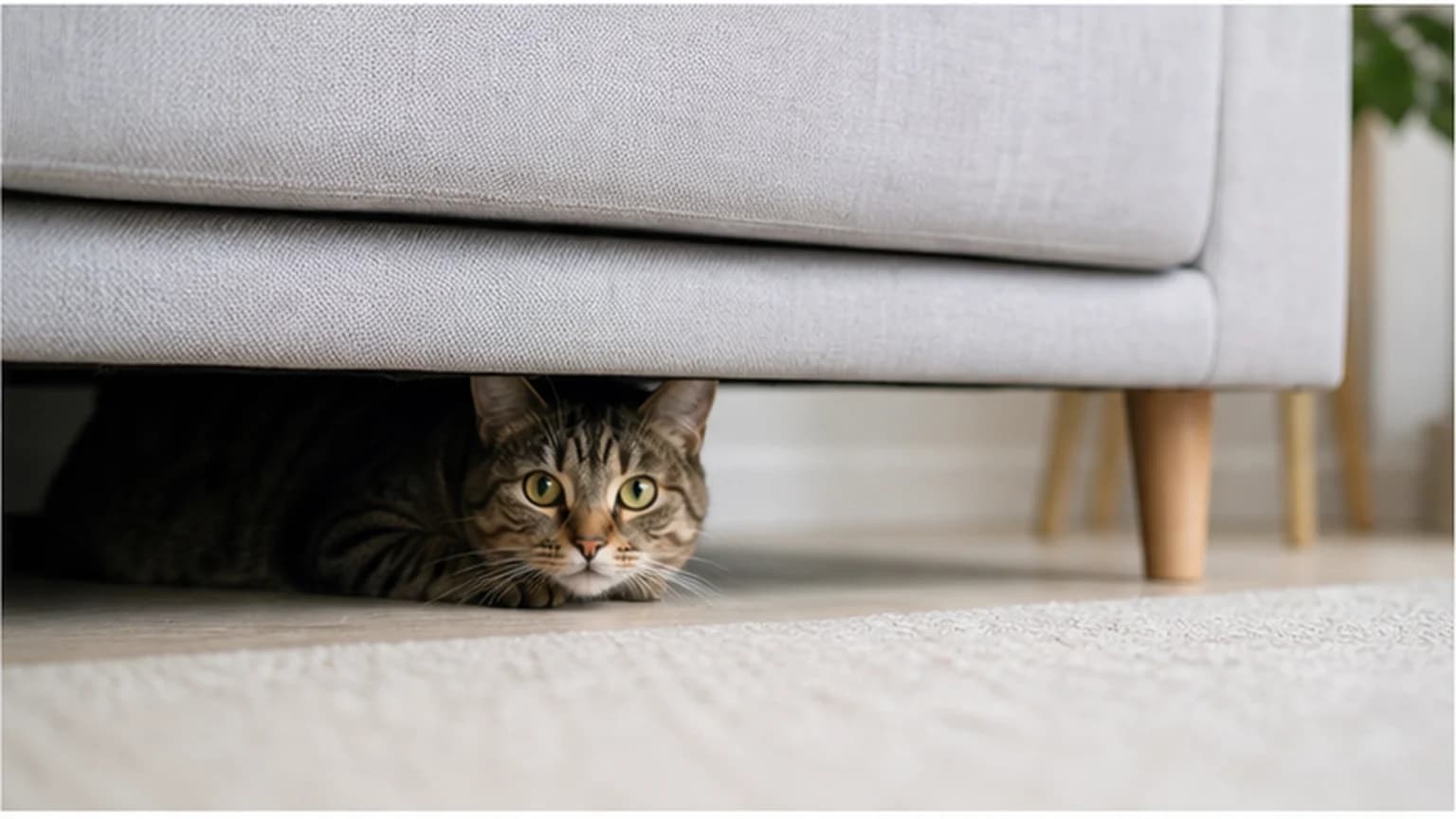
You walk into your living room expecting your cat to greet you, but the room is quiet. Hours pass, and you finally find your cat tucked away under the bed or squeezed behind the dryer in the laundry room.
When a normally social cat retreats into seclusion, it naturally causes concern. Why do cats seek out dark, quiet spaces, and when does hiding signal that your cat needs extra help?
Quick Answer
The Short Answer: Cats hide primarily to cope with stress, environmental changes, or unfamiliar visitors. However, because cats instinctively mask discomfort, sudden or persistent hiding can also be an early sign of physical discomfort.
Common Reasons Cats Seek Quiet Spaces
1. Environmental Changes and Noise Stress
Cats thrive on routine and predictable environments. Loud construction outside, thunderstorm noise, new furniture arrangements, or houseguests can overwhelm a cat's sensitive ears and heightened sensory system. Hiding gives them a safe zone to process external stress.
2. Household Transitions
Introducing a new pet, bringing home a newborn, or moving into a new home alters the territorial scents and routines your cat relies on. Withdrawing into a quiet room allows your cat to re-establish a sense of boundary control.
3. Instinctual Self-Preservation
In the wild, a sick or injured animal is vulnerable to larger predators. Domestic cats retain this protective instinct. When feeling under the weather or experiencing physical discomfort, a cat’s default instinct is to retreat to a quiet, sheltered space.
4. A Normal Need for Rest and Privacy
Not every retreat signals fear. Cats sleep for much of the day and often choose a quiet place where people, children, or other pets will not interrupt them. A predictable afternoon nap in a familiar closet can be part of an ordinary routine.
The distinction is change. A cat who has always slept under the bed but still eats, plays, grooms, and socializes normally presents a different picture from a social cat who suddenly disappears and avoids meals.
5. Social Pressure or Resource Competition
Another cat, dog, or person may unintentionally block access to hallways, food, water, resting places, or litter boxes. Conflict is not always loud. Staring, following, doorway guarding, and quietly displacing another cat can make hiding feel safer.
Observe paths through the home. Can each cat reach important resources without passing a housemate? Multiple, separated stations reduce the chance that one animal controls them all.
Normal Hiding Versus a Concerning Change
Use the whole pattern rather than the hiding place alone:
| More consistent with a normal retreat | Reason to seek advice |
|---|---|
| Uses familiar safe spots | Hiding begins suddenly or intensifies |
| Emerges for normal meals and activity | Misses meals or eats much less |
| Relaxed posture while resting | Hunched, tense, restless, or unusually still |
| Normal litter-box use | Change in urination or stool |
| Responds as usual to familiar people | Avoids contact or reacts unusually |
| Returns to routine after a brief stressor | Persists after the event has passed |
This table cannot diagnose the cause. It helps you decide what information to collect and whether the change merits veterinary or behavior support.
Look for the Trigger
Think back to when the hiding changed. Common household triggers include:
- visitors, parties, or workers in the home;
- construction, fireworks, storms, or a new appliance;
- moving furniture or changing a familiar room;
- a new pet, baby, roommate, or frequent guest;
- tension between resident animals;
- a carrier trip, veterinary visit, or boarding stay;
- a changed feeding or work schedule; and
- loss of a familiar person or animal.
Avoid assuming the first event you remember is definitely the cause. A trigger and a physical problem can occur at the same time. Continue monitoring appetite, movement, grooming, drinking, and litter-box habits.
Practical Guidance: How to Support a Hiding Cat
- Create Safe, Designated Hiding Places: Provide comfortable, elevated cat caves or cozy covered beds in quiet areas so your cat doesn't have to hide behind dusty appliances.
- Do Not Force Interaction: Dragging a stressed cat out from under a bed can increase anxiety and risk accidental scratches. Allow your cat to emerge at their own pace.
- Maintain Routine: Keep feeding times, litter box placement, and quiet playtime consistent to restore environmental predictability.
Make Safe Places Easy to Use
Offer more than one type of retreat: a covered bed, open carrier with familiar bedding, cardboard box on its side, or perch with partial visual screening. Provide both low and elevated options because preferences vary.
Choose locations that are quiet but still allow the cat to observe and leave freely. A hiding place should not become a trap where a child, dog, or another cat can block the only exit. Remove access to unsafe gaps behind appliances, inside reclining furniture, or near electrical and mechanical hazards after providing better alternatives.
Keep Resources Accessible
Place food, water, litter boxes, scratching surfaces, and resting areas where the cat can reach them without crossing a busy or contested route. Do not move every resource directly beside the hiding spot; cats generally benefit from separation between eating, drinking, resting, and toileting areas.
For a newly arrived cat, a quiet starter room can make the home feel manageable. Include all essential resources with appropriate spacing and expand access gradually as confidence grows.
Let the Cat Control Contact
Sit nearby at a comfortable distance, turn slightly sideways, and speak softly. Avoid reaching into the hiding place or maintaining a fixed stare. You can toss a treat nearby if the cat is eating normally, but do not use food to lure them into an interaction they cannot escape.
When the cat emerges, keep the response calm. Sudden excitement, grabbing, or surrounding them can send them back. Reinforce voluntary exploration with space, gentle attention when invited, and access to the safe retreat.
Reduce Noise and Predictable Stress
Close curtains during visual disturbances, provide background sound during intermittent noise, and ask visitors to ignore the cat until the cat approaches. Keep doors and windows secure during fireworks, storms, moves, or construction when escape risk may increase.
Synthetic feline pheromone products may be considered as one part of environmental support, but they do not replace resources, gradual introductions, or professional evaluation. Follow product directions and maintain realistic expectations.
Helping a New Cat Settle In
Hiding is common after adoption or a move. Begin with a manageable room rather than immediate access to an entire unfamiliar home. Keep the carrier available as a familiar refuge, and maintain the food and litter type the cat already knows when possible.
Visit quietly for short periods. Read, work, or sit without demanding interaction. Some cats explore within hours; others need days or longer. Progress includes eating, toileting, grooming, playing, resting openly, and investigating while people are present—not simply being pulled out.
If the new cat does not eat, seems unwell, or fails to use the litter box normally, contact the adoption organization or a veterinarian promptly.
Multi-Cat Hiding
When one cat hides from another, increase the number and separation of resources. A common starting principle is one litter box per cat plus an additional box, distributed across locations rather than lined up together. Provide multiple feeding, drinking, resting, scratching, and elevated areas.
Reintroductions may need to proceed slowly using separate spaces, scent exchange, and controlled visual access. Persistent chasing, blocking, or conflict deserves help from a veterinarian or qualified feline behavior professional. Do not force cats into close proximity to “work it out.”
What Not to Do
- Do not drag, tip, or chase a cat out of a hiding place.
- Do not block every retreat before safe alternatives are accepted.
- Do not punish hiding, hissing, growling, or defensive swatting.
- Do not assume spite, guilt, or stubbornness.
- Do not wait through reduced appetite or other physical changes because a stressor seems obvious.
- Do not give calming medication or supplements without veterinary guidance.
When the Situation Needs Attention
A sudden or persistent behavior change can sometimes indicate physical discomfort or underlying illness. If your cat's hiding is new, persistent, or accompanied by changes in appetite, drinking, or litter box habits, contact a veterinarian.
Seek prompt advice if hiding occurs with not eating, repeated vomiting, breathing changes, difficulty moving, collapse, suspected injury, toxin exposure, straining to urinate, or little to no urine. Do not attempt to diagnose pain or illness from posture alone.
For hiding that appears stress-related but does not improve, start with a veterinary check to address health overlap. A qualified behavior professional can then help assess the environment, relationships, and a gradual support plan.
Frequently Asked Questions
Should I block access under the bed?
Only after offering safe alternatives the cat uses, and only if the area needs to be inaccessible for safety or practical reasons. Removing every refuge at once can increase stress.
How long is too long for a new cat to hide?
There is no universal deadline. Monitor eating, drinking, toileting, movement, and gradual exploration. Contact a veterinarian or adoption professional if basic needs are not being met or progress is absent.
Why does my cat hide when visitors arrive?
Unfamiliar voices, movement, scents, and attempts at contact can be overwhelming. Give the cat a visitor-free room or retreat and ask guests not to pursue them.
Should food be placed inside the hiding spot?
Keep food accessible in a quiet location, but avoid pushing it deep into an unsafe gap or placing it beside litter. For a cat who is not eating normally, call a veterinarian instead of repeatedly moving food closer.
Key Takeaway
Hiding is a normal way for cats to seek rest, control, and safety, especially during change. Offer secure retreats, separated resources, predictable routines, and choice about interaction. The important question is whether the behavior fits your cat's usual pattern: sudden or persistent hiding with appetite, litter-box, movement, or other changes warrants veterinary attention.