Opening
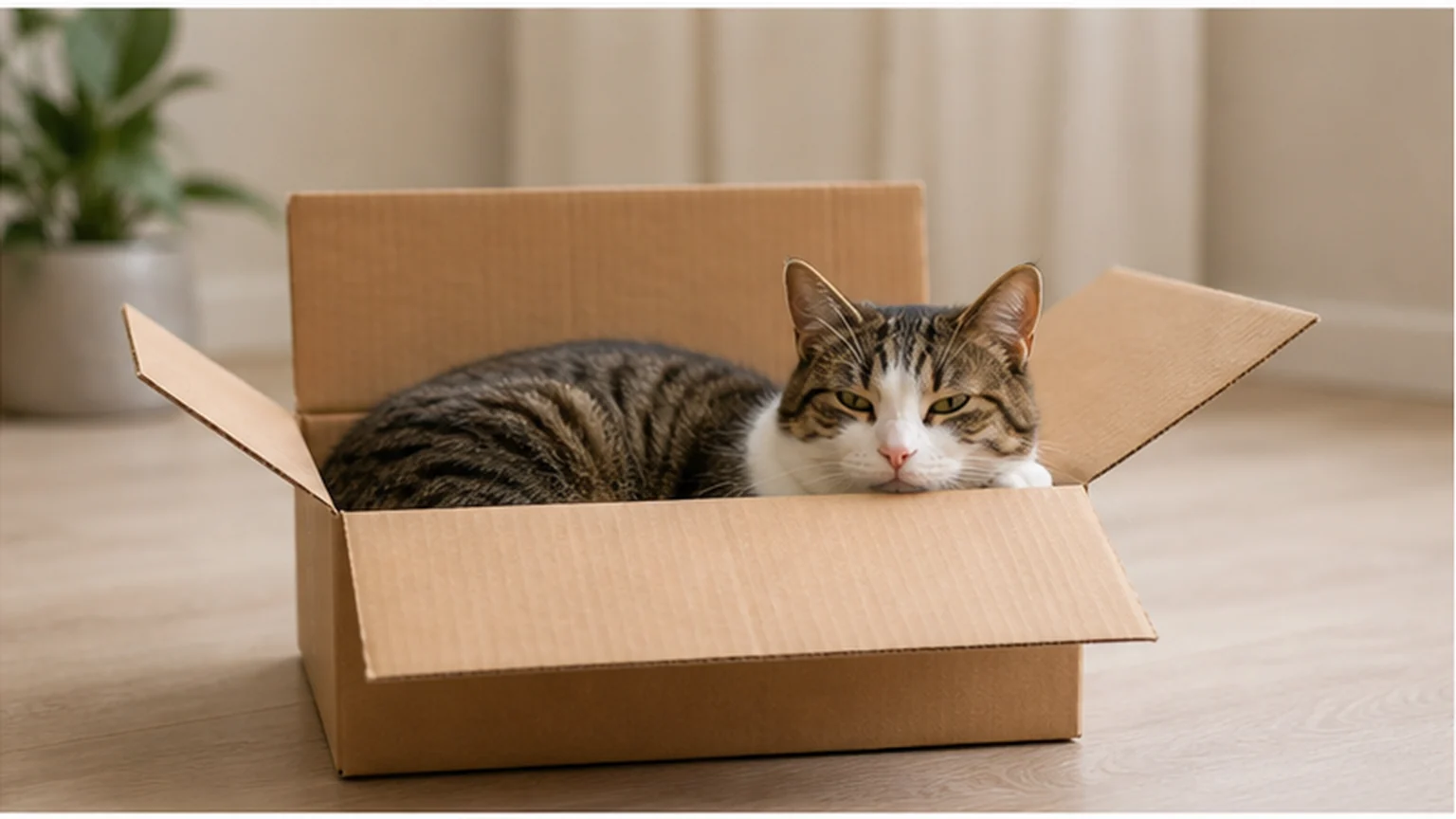
You buy your cat a plush orthopedic bed, unpack it carefully, and set it up in the sunniest corner of the living room. Your cat steps over the luxurious bed, marches straight to the discarded shipping box, squeezes inside, and closes their eyes with supreme contentment.
Why is a simple cardboard box infinitely more attractive to your cat than an expensive store-bought bed?
Quick Answer
The Short Answer: Cardboard boxes provide cats with an instinctual sense of security by blocking line-of-sight threats, reducing stress, and insulating ambient heat.
Why Cardboard Boxes Are Feline Favorites
1. Instant Stress Reduction and Security
Cats are ambush predators, but in open spaces, they can also feel vulnerable. A cardboard box offers four solid walls that eliminate 360-degree ambush angles.
Researchers at Utrecht University found that cats provided with hiding boxes adapted to new environments significantly faster and exhibited dramatically lower stress levels compared to cats without boxes.
2. Excellent Thermal Insulation
Cardboard is surprisingly effective at trapping heat. Corrugated cardboard contains tiny air pockets between its layers that act as thermal insulation, helping your cat maintain their preferred body temperature of 85°F to 100°F without burning extra calories.
3. A Cozy Sensory Micro-Space
Cats feel comforted when their sides touch solid boundaries. Squeezing into a snug box provides light pressure that mimics the cozy feeling of sleeping in a nest or next to littermates.
4. A Useful Lookout and Ambush Point
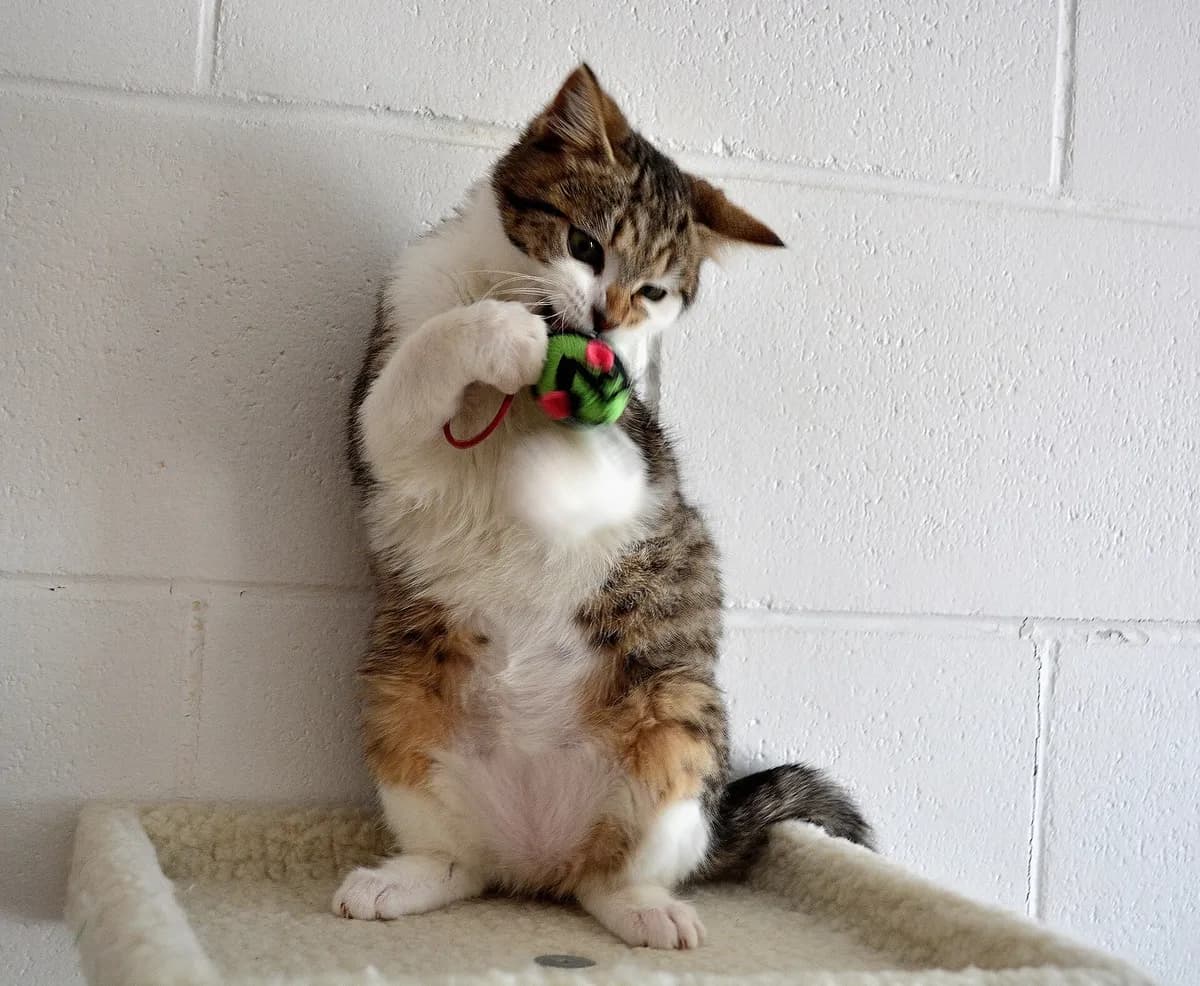
A box does not have to be completely closed to feel useful. From an opening, a cat can watch activity while keeping most of their body concealed. The same setup supports play: toys can pass the entrance, paws can reach through cutouts, and the cat can choose when to emerge.
This combination of concealment and visibility gives the cat control. A box in a calm room may become a sleeping place, while one near a play area may function more like an ambush station.
5. Novelty and Familiar Scent
A newly delivered box brings unfamiliar smells and textures worth investigating. After a cat rubs, scratches, or sleeps in it, the box also collects familiar scent. That can turn a novel object into part of the cat's known territory.
Novelty alone does not explain continued use, and scent is not the only attraction. Warmth, location, fit, household activity, and previous experience can all contribute at the same time.
Why the Expensive Bed May Lose
A commercial bed may be soft but still miss the features the cat values. It might be placed in an exposed walkway, smell strongly of packaging or detergent, wobble underfoot, have an entrance that feels awkward, or sit far from the household activity the cat wants to observe.
Rather than viewing the unused bed as a failed purchase, compare it with the chosen box:
| Feature | Questions to ask |
|---|---|
| Location | Is the box warmer, quieter, higher, or closer to you? |
| Cover | Does the bed leave the cat exposed from several directions? |
| Size | Can the cat turn around and settle while still feeling enclosed? |
| Texture | Does the cat prefer firm cardboard to deep or unstable cushioning? |
| Scent | Does the bed smell unfamiliar or strongly laundered? |
| Access | Is the entrance easy for the cat's size and mobility? |
Move the bed near the favored location, add familiar bedding, or place it partly inside a larger box if the design allows. Let the cat investigate voluntarily rather than repeatedly placing them in it.
Practical Guidance: Making the Most of Box Time
- Add a Soft Layer: Line the bottom of the box with a small fleece blanket or an old t-shirt carrying your scent.
- Safety First: Remove metal staples, sharp plastic shipping tape, or handles that could snag a paw.
- Rotate Boxes: When a box gets worn out, replace it with a fresh one to give your cat a new sensory enrichment experience.
Choose and Prepare a Safe Box
Select clean, dry cardboard without chemical residue, food contamination, heavy fragrance, or signs of pests. The box should sit flat and remain stable when the cat enters or jumps out. Remove staples, loose tape, plastic straps, string, foam, and packing material that could be chewed, swallowed, or wrapped around the body.
Cut openings only with the cat away from the work area. Smooth rough edges and make entrances large enough that the cat cannot become wedged. A box used by a kitten should not contain handles or gaps that can trap the head or limbs.
Keep boxes away from hot appliances, heaters, open flames, damp areas, unstable shelves, and doors where they could be crushed. Never close, stack, recycle, or move a box without checking inside. Make that check a household habit.
Replace cardboard when it is wet, soiled, moldy, heavily chewed, or structurally weak. A box that collapses during use may frighten or injure the cat.
Find the Right Size and Location
Cats often enjoy a snug fit, but snug should still allow normal entry, turning, resting, and exit. Offer several sizes and shapes rather than assuming the smallest possible box is best. Older cats or cats with limited mobility may need a low entrance and more room to reposition.
Location can matter more than the box itself. Try one near a sunny window, one in a quiet corner, and one close to where people spend time. Avoid placing the only refuge in a dead end where another pet can guard the exit.
Do not disturb a sleeping cat merely to test whether the location works. Observe which boxes are used, at what times, and for sleeping versus play.
Turn Boxes Into Low-Cost Enrichment
A cardboard box can support several activities:
- place a familiar blanket inside for rest;
- cut large, smooth side openings for exploration;
- connect two stable boxes to make a short tunnel;
- hide a toy or a few pieces of the measured food allowance inside;
- use an open box as a destination during calm reward-based training; or
- rotate the box to a new safe location after interest fades.
Supervise new configurations until you know how your cat interacts with them. Avoid tiny holes that catch paws, unstable towers, and dangling string. If food is used, account for it in the daily total and remove leftovers.
Not every box needs modification. For many cats, an ordinary open shipping box is already useful because it lets them choose rest, observation, or play.
Boxes in a Multi-Cat Home
One popular box can become a contested resource. Provide several retreats in different locations, ideally with more than one route through the room. Do not force cats to share or place all boxes side by side where one cat can control access.
Watch for quiet social pressure: staring, doorway blocking, following, or displacing another cat from the box. A cat who stops using a favorite refuge may be responding to a housemate rather than losing interest in cardboard.
Offer a broader resource network with separate resting areas, elevated perches, scratching surfaces, food, water, and litter boxes. Boxes help, but they cannot compensate for all household competition.
Cardboard Scratching and Chewing
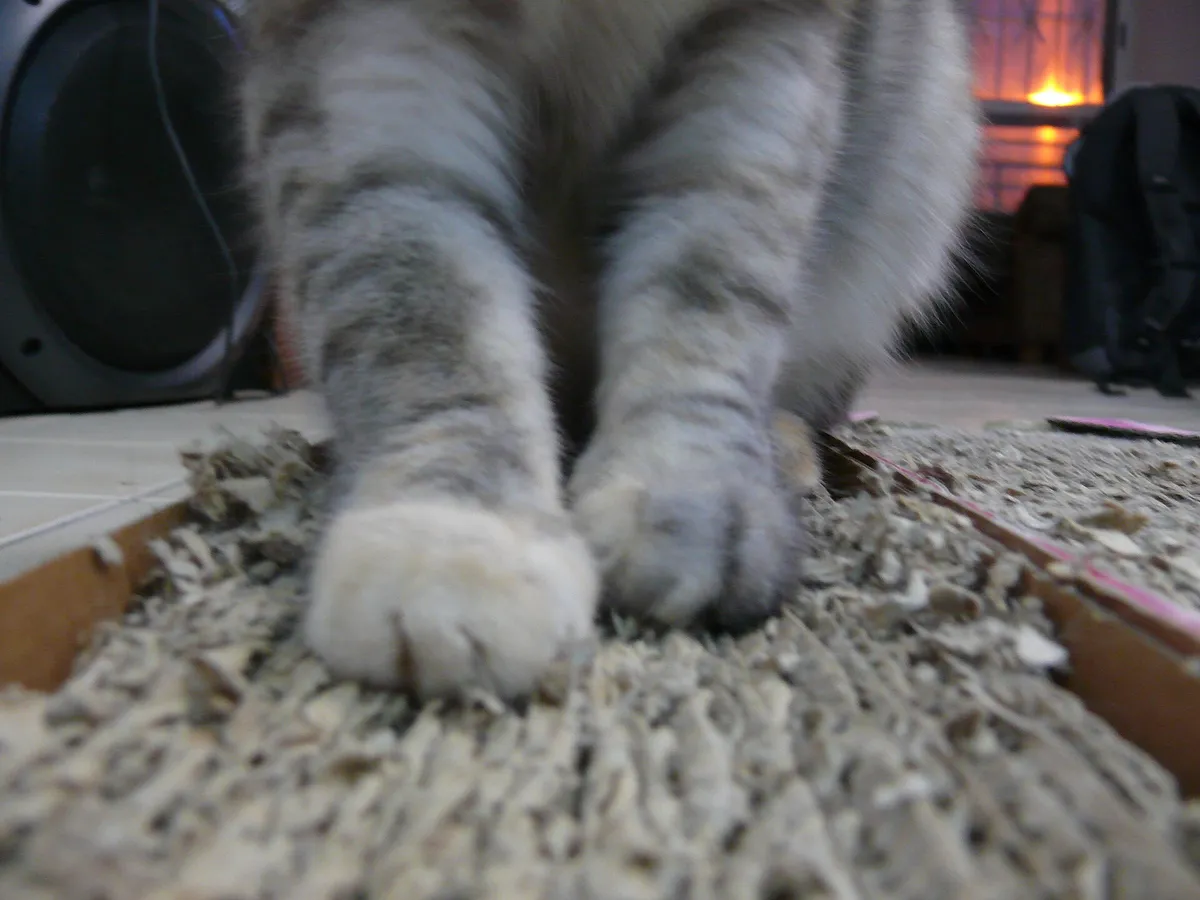
Scratching cardboard is a normal use for many cats. It provides a disposable surface for stretching and claw maintenance. Place the box where debris is easy to clean and replace it when torn pieces make it unstable.
Lightly mouthing an edge during exploration differs from repeatedly eating cardboard. Remove pieces that can be swallowed. If your cat persistently consumes cardboard or other non-food materials, or if chewing is new and intense, contact a veterinarian for advice rather than assuming it is harmless play.
When a Box Is Not the Best Option
Cardboard is not washable, so a plastic carrier, washable covered bed, or other easy-to-clean refuge may be more practical during illness, parasite control, or house-soiling. Follow veterinary cleaning guidance when a contagious condition is involved.
Cats who become hot, pant, appear weak, or cannot move away from a warm area need prompt attention. A box should offer choice, not trap heat or restrict exit. Keep fresh water available elsewhere in the room.
What Not to Assume
[!NOTE] Don't Take It Personally: Your cat isn't rejecting your expensive cat bed out of ungratefulness. They are simply following a deep-seated feline survival instinct that prioritizes enclosed security and thermal comfort.
Frequently Asked Questions
Why does my cat choose a box that looks too small?
Close boundaries may feel secure, and the location or warmth may be appealing. Still, offer a larger alternative and make sure the cat can enter, turn, breathe, and leave freely.
Should I put a blanket in every box?
No. Some cats prefer bare cardboard, while others choose soft lining. Offer both and let use reveal the preference.
How long can I keep a cardboard box?
Keep it only while it remains clean, dry, stable, and free of hazardous tape or damage. There is no benefit to preserving a worn box that can collapse or harbor contamination.
Is hiding in a box always normal?
Box use is usually ordinary. A sudden increase in hiding accompanied by reduced appetite, movement changes, unusual posture, litter-box changes, or other signs deserves veterinary attention.
Key Takeaway
A plain cardboard box can provide security, warmth, observation, rest, and play at very little cost. Remove packaging hazards, choose a stable size and safe location, and offer several options rather than forcing use. Your cat is not rejecting a purchased bed out of ingratitude; the box may simply match the features they value more closely.