The short answer
Cat ownership has four kinds of cost: one-time setup, recurring supplies, preventive care, and unexpected or optional services. The total varies by location, food and litter choices, the cat's age and health, and whether you adopt one cat or more.
There is no honest universal annual price. Build a local budget using current prices from the shelter, veterinary clinics, shops, insurer, and emergency hospital you would actually use. Record the currency, location, and date, then revisit the estimate at least yearly.
Build a realistic budget
Start with five columns:
| Category | Frequency | Local estimate | Essential or optional? | Notes |
|---|---|---|---|---|
| Setup | One time or occasional replacement | Mostly essential | Carrier, litter boxes, scratching | |
| Food and litter | Weekly or monthly | Essential | Based on actual product use | |
| Preventive care | Annual or scheduled | Essential | Clinic-specific plan | |
| Emergency reserve or insurance | Monthly contribution or premium | Essential planning | Check terms and access | |
| Services and upgrades | As needed | Often optional | Boarding, sitter, furniture |
Do not fill the sheet with national averages when local quotes are available. Currency, taxes, housing, transport, clinic access, and product availability can change the result dramatically.
One-time setup
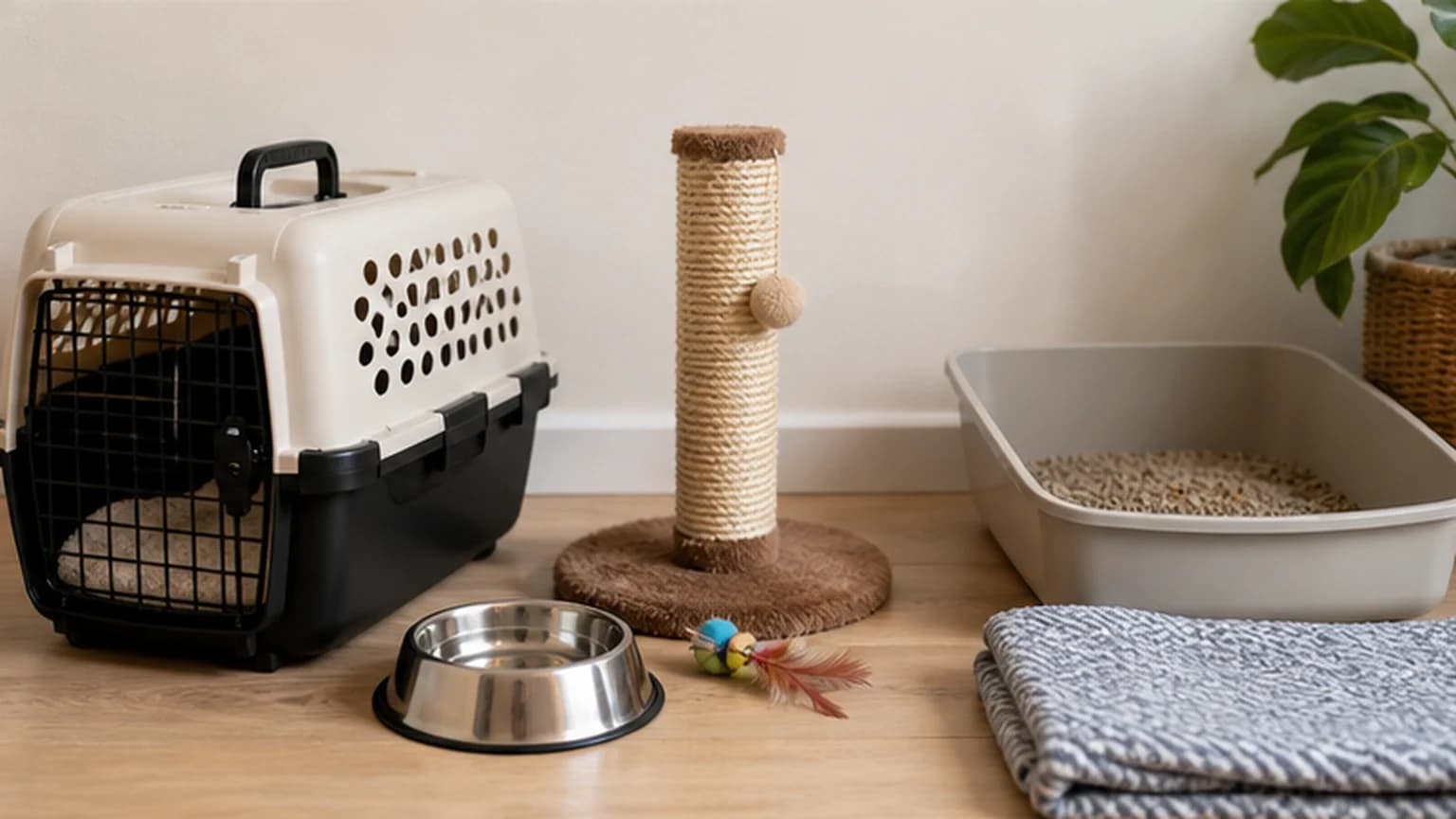
Plan for adoption or purchase fees, a carrier, bowls, litter boxes, initial food and litter, bedding, scratching surfaces, and basic toys. Kitten-proofing may also require gates, cord covers, or secure storage.
“One-time” does not always mean permanent. Carriers, fountains, litter boxes, beds, and scratchers wear out or become unsuitable. Include a replacement allowance rather than assuming the setup lasts for the cat's lifetime.
Prioritize function over matching décor. A secure carrier, enough appropriately sized litter boxes, stable scratching surfaces, safe food and water containers, identification, and a protected home matter more than a large collection of novelty accessories.
Ask the adoption organization what is included. The fee may cover some initial vaccinations, identification, parasite treatment, or spay/neuter services, but policies vary. Confirm details rather than subtracting assumed benefits from the budget.
Recurring essentials
Food, litter, replacement toys, parasite prevention where recommended, and routine supplies belong in the monthly plan. Recalculate food costs when calorie density or feeding needs change.
Estimate food from the amount the cat will actually eat, not simply bag or can price. A more calorie-dense product may last longer, while a lower-calorie wet food may require more containers. Treats and toppers add cost and calories.
For litter, calculate full changes as well as top-ups. More cats require more boxes and generally more litter, cleaning supplies, and waste disposal. Very cheap litter that the cat avoids is not a saving.
Include recurring replacement of scratchers, filters, fountain parts, toys, cleaning tools, and identification details when needed. Subscription discounts can help only when they do not encourage overbuying products that expire or go unused.
Preventive and contingency care
Budget for examinations, vaccines, identification, dental care, and other veterinary recommendations. Keep an emergency reserve or consider insurance after checking exclusions, waiting periods, deductibles, and reimbursement rules.
Ask local clinics for current pricing and what a routine visit includes. Preventive needs vary with age, lifestyle, location, history, and individual risk. Avoid building a plan around skipping examinations or delaying recommended care.
Dental costs can be significant and are easy to omit from a simple annual estimate. Home dental care may support oral health, but it does not guarantee that professional assessment or treatment will never be needed.
Transport belongs in the medical budget too. Include fuel, public transport restrictions, taxi or rideshare policies, parking, or a pet-transport service, especially for emergency and after-hours care.
Emergency Savings Versus Pet Insurance
An emergency fund is flexible and has no claim exclusions, but it takes time to build and may be insufficient early on. Insurance can transfer some financial risk, but the owner may still need to pay the clinic first and wait for reimbursement.
Before buying a policy, read:
- exclusions and definitions of pre-existing conditions;
- waiting periods;
- annual, lifetime, or per-condition limits;
- deductible or excess structure;
- reimbursement percentage and calculation method;
- coverage for diagnostics, dental care, medication, and follow-up;
- age-related enrollment or premium changes; and
- whether the clinic is paid directly or you are reimbursed later.
Compare policies using the same hypothetical event and local clinic prices. The cheapest premium is not automatically the lowest total risk. Some households combine insurance with savings for deductibles, exclusions, and non-covered expenses; others maintain a larger dedicated reserve.
Optional services
Boarding, pet sitting, grooming, training, delivery fees, and upgraded furniture are useful but not equally necessary for every household.
Travel can make optional services temporarily essential. Price reputable boarding or in-home care before booking a trip, and account for peak-season rates, medication administration, key exchange, and transport.
Most short-haired cats do not require routine professional grooming, but coat type, mobility, temperament, and health can change grooming needs. Behavior consultation may also become valuable for introductions, fear, scratching, or conflict. Qualified support can prevent repeated purchases that do not address the real problem.
First-Year Versus Ongoing Costs
The first year often concentrates setup, adoption, initial veterinary, identification, and possibly spay/neuter costs. Later years may have fewer setup purchases but still include replacements and changing health needs.
Create two totals:
- Arrival budget: everything needed before and during the first month.
- Ongoing annual budget: recurring essentials, preventive care, replacements, and contingency planning.
Keep the emergency reserve separate from routine spending. If it is repeatedly used for food or litter, the contingency plan no longer exists.
The Cost of Two Cats
Two cats do not cost exactly twice as much in every category, but the increase is substantial. Some furniture and toys can be shared; food, litter use, identification, veterinary care, insurance, medication, and boarding generally apply to each cat.
More cats also require distributed resources. Plan for multiple litter boxes, feeding areas, water stations, resting places, scratchers, and carriers. Buying one oversized item is not always equivalent to providing enough independent access.
Do not adopt a second kitten because shared toys appear inexpensive. Use the one-or-two-kittens guide to consider behavior, space, time, and long-term cost together.
Reduce Cost Without Reducing Care
- Compare unit prices and calories rather than package price alone.
- Buy quantities that can be stored safely and used while fresh.
- Use durable, washable basics instead of frequently replacing novelty items.
- Make simple cardboard enrichment and rotate existing toys.
- Maintain measured food to reduce waste.
- Keep preventive appointments and discuss budget openly with the clinic.
- Request written treatment estimates and ask which decisions are urgent, recommended, or optional.
- Update identification so a lost cat is more likely to return quickly.
Avoid unverified medication, supplements, homemade diets, delayed emergency care, or skipping core resources as “savings.” A cheaper purchase is not economical if it is unsafe, nutritionally incomplete, or unusable by the cat.
Questions to Ask Before Adoption
- What does the adoption fee include?
- What food and litter does the cat currently use?
- Are there known medical, dental, behavior, or medication needs?
- Which local clinic and emergency hospital could you reach?
- What are their current examination and payment policies?
- Can your housing accommodate litter boxes, scratching, and safe indoor space?
- Who pays and provides care during travel or illness?
- Could you manage a significant unexpected expense tomorrow?
If the answers reveal a gap, delay adoption while building the plan. Waiting is kinder than relying on optimism that necessities will not arise.
Do not delay urgent veterinary care because a cost estimate seems high. Before adoption, ask local clinics about preventive-care pricing, payment policies, and emergency options.
If cost becomes a barrier, tell the veterinary team early. Ask about diagnostic and treatment priorities, written estimates, payment methods, insurance claim processes, local charitable resources, and reputable lower-cost services. Availability varies, and no resource can be guaranteed, but early conversation provides more options than waiting until a condition worsens.
Keep the Budget Current
Review costs after a food change, move, new medical need, insurance renewal, or major price increase. Save receipts for several months to replace estimates with actual spending. Mark the currency, country or city, and review date on the worksheet.
Track annual totals without using them to judge every purchase emotionally. The purpose is predictable care and informed choices, not proving that the cat is “cheap” or “expensive.”
Frequently Asked Questions
Is adoption cheaper than buying a cat?
The initial fee may be lower and may include services, but lifetime costs are dominated by ongoing care. Confirm exactly what either source provides and prioritize responsible acquisition and health information.
Is pet insurance worth it?
It depends on policy terms, local veterinary prices, the cat, and household finances. Compare exclusions, limits, deductibles, reimbursement, and the cash needed before a claim is paid.
What is the biggest cost?
There is no universal answer. Food and litter are steady expenses, while veterinary care can be less frequent but much larger. Local pricing and individual health determine the balance.
Can two cats share everything?
Some toys and furniture can be shared, but each cat needs access to core resources, individual veterinary care, identification, food planning, and transport. Budget for multiple litter boxes and carriers.
Key Takeaway
Estimate cat ownership locally and transparently: separate arrival costs, recurring essentials, preventive care, contingency funding, and optional services. Date the plan, price the actual products and clinics you would use, and review insurance or savings before an emergency. A realistic budget protects both the cat's care and the household's financial stability.
Use the new cat owner checklist, kitten shopping list, and one-or-two-kittens decision guide.